Launching a brand into a new market is one of the few moments in marketing where there’s no existing audience to build on. No prior brand awareness to lean into, no established community to activate, no historical data to optimise against. Everything the brand becomes in that market gets decided in the first few weeks, which is exactly why so many international launches underperform: they’re built with the confidence of a brand that already has a foothold, in a market where it doesn’t yet have one.
The brands that get this right tend to share one structural decision: they don’t choose between experiential and influencer marketing, they build both into the same strategy from day one. Two real launches make that case clearly. Introducing Lattafa’s Middle Eastern fragrances to Brazil, and bringing the K-beauty brand SKIN1004 into its first US flagship in New York, are different brands in different categories entering different markets – but the underlying lessons overlap in ways that matter for anyone planning international expansion.
Why translating a campaign is not the same as launching a brand.
The instinct in a lot of market entry planning is to take what already works at home and adapt it: same messaging, same visuals, same campaign structure, with local language and a few market-specific details layered on top. That approach mistakes a market for an audience segment. A new country isn’t a new segment of an existing audience. It’s an audience that has never had a reason to trust the brand yet, operating inside its own cultural context, retail habits and social dynamics.
That’s the gap a genuine experiential agency has to close: not simply translating a message, but building the moments that let a new market meet a brand on its own terms, in places and formats that already make sense locally. Get that structural decision right, and the rest of the launch has somewhere solid to stand.
Lesson one: Lattafa Brazil proves interactive retail still works, if it’s genuinely interactive.
Introducing a Middle Eastern fragrance house to Brazilian consumers meant solving a specific problem: fragrance is a deeply sensory, trust-dependent category, and no amount of digital content substitutes for a consumer actually experiencing a scent in person. The answer was a two-week interactive retail activation engaging Brazilian consumers directly with Lattafa’s Elixir fragrances, built to bring the product to life rather than simply display it.
The campaign, run under #TogetherTrouble, generated 400 pieces of user-generated content and an estimated 4.4 million impressions. Those numbers matter less as a headline and more as a demonstration of cause and effect: a retail activation built specifically to be experienced and shared, rather than just browsed, gives consumers something worth documenting themselves. The UGC volume didn’t happen because Brazilian consumers were told to post. It happened because the activation gave them something genuinely worth posting about.
The lesson for any brand entering a new market through retail: a pop-up or in-store activation only earns organic amplification if it’s designed as a shareable moment from the outset, not decorated with a hashtag afterward. Introducing Lattafa to Brazil shows what that looks like when it’s built correctly from the brief.
Lesson two: SKIN1004 NYC proves a flagship needs a runway, not just an opening night.
Bringing a K-beauty brand into its first permanent US flagship raised a different problem entirely. A single-night store opening, however well produced, asks New York consumers to discover, understand and commit to a new skincare brand all in one evening. SKIN1004’s approach instead treated the flagship opening as the culmination of a much longer introduction, not the introduction itself.
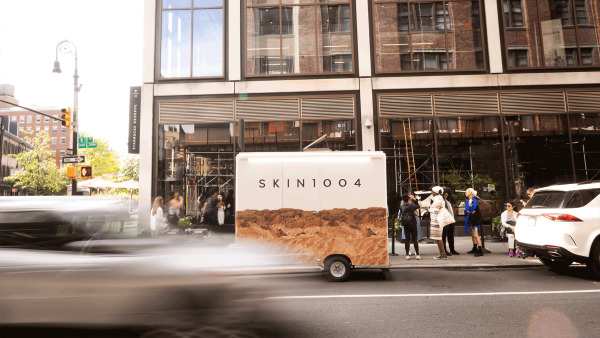
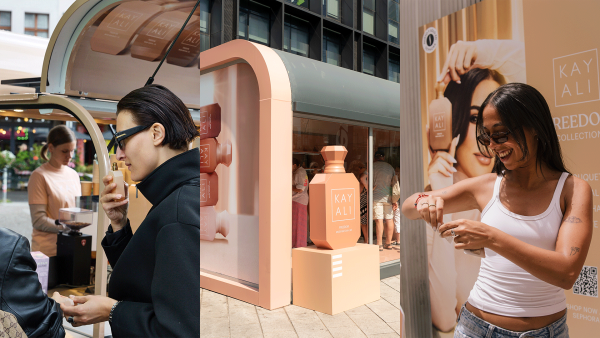
The launch began with a teaser phase across September and October, using a travelling SKIN1004 sampling truck that popped up in high-footfall New York neighbourhoods including Meatpacking and Williamsburg. Passersby sampled SKIN1004’s hero products while enjoying branded treats, vanilla and cinnamon-filled hotteoks inspired by the brand’s Centella ingredient story, connecting the product experience to a genuine piece of the brand’s identity rather than a generic giveaway. By the time the flagship arrived in Soho, an experiential press and influencer launch event bridged education, sensorial discovery and content creation moments, giving media and creators a reason to engage with the space rather than simply photograph it.
Across six sampling days and months of layered brand moments, more than 8,000 consumers engaged directly with SKIN1004. Crucially, the sampling mechanic itself required guests to follow the brand to unlock the final product, a simple structural choice that consistently drove spikes in SKIN1004’s social following during each activation window. That’s a physical activation engineered to produce a digital outcome, not a physical event that happened to have a hashtag attached.
The lesson here: a flagship launch benefits enormously from a runway. Building familiarity across weeks or months before asking a new audience to visit a permanent store gives the eventual opening something to convert, rather than asking one evening to do all the work of introduction and conversion at once. See the full detail in the SKIN1004 New York Flagship Launch case study.
What both launches prove when read together.
Lattafa and SKIN1004 solved different problems, in different categories, in different countries, but the underlying discipline is identical. Neither treated the physical activation and the digital amplification as separate workstreams to coordinate between. As we’ve written elsewhere, an experiential activation without digital amplification is a room full of people who had a good time and told no one, and an influencer campaign without a physical anchor is content that performs once and fades. Neither is broken on its own, but when a brand runs both in isolation on a market entry, it’s leaving the compounding effect on the table at exactly the moment it can least afford to.
Both launches also treated the new market’s own culture, whether that’s Brazilian fragrance retail habits or New York’s relationship with K-beauty and street-level sampling culture, as the starting point for the strategy rather than an afterthought layered onto an imported campaign. That’s the difference between a brand that announces itself in a new market and a brand that actually gets introduced.
What this means for a brand planning its own market entry.
If international expansion is on the roadmap, the planning question worth asking early isn’t “which market first” or “how big a launch budget.” It’s whether the launch is being built as one integrated strategy, spanning a physical, shareable activation and a properly resourced global influencer marketing agency in London partnership, or whether experiential and influencer are being planned as two separate line items that will only meet each other by coincidence.
Read more on why that integration matters structurally, not just operationally, in why integrated experiential and influencer marketing delivers more than either can alone, and how the right creator selection underpins any market entry in how MG Empower’s multi-tier influencer procurement works.
Frequently asked questions.
What is the biggest risk when launching a brand in a new market? The biggest risk is treating a new market as a smaller version of the home market and simply translating an existing campaign into it. Consumers in a new country need to be introduced to a brand on their own cultural terms, through touchpoints and formats that already make sense to them, rather than through a message built for somewhere else.
Should a brand launch use experiential marketing, influencer marketing, or both? Both, run as one connected strategy rather than two separate projects. An experiential activation without digital amplification is a room full of people who had a good time and told no one. An influencer campaign without a physical anchor is content that performs once and fades. Combining them, with influencers briefed around the same narrative as the physical activation, produces a compounding effect that neither channel delivers alone.
What results has this approach delivered for real brand launches? Introducing Lattafa’s fragrances to Brazil through a two-week interactive retail activation generated 400 pieces of user-generated content and an estimated 4.4 million impressions. SKIN1004’s phased entry into New York, combining a teaser sampling truck with a flagship launch event in Soho, saw more than 8,000 consumers engage directly with the brand across six sampling days.
How long should a market entry campaign run before a flagship or retail launch? There is no universal number, but building in a teaser or awareness phase ahead of the main launch consistently outperforms a single-moment reveal. SKIN1004’s New York entry ran a teaser phase across September and October ahead of its Soho flagship opening, giving the brand months to build familiarity before asking consumers to visit a permanent store.
Planning your own market entry.
Every new market is a blank page, and a blank page is exactly where the wrong strategy is easiest to get away with, because there’s no existing performance data to prove it wasn’t working. If your brand is planning a launch into a new country or a new flagship market, our team can walk you through how an experiential and influencer strategy should be built together from the very first conversation, not stitched together after the venue is already booked. Get in touch to talk through your market entry plans, or explore our full experiential agency offering to see how launches like these come together end to end.
 SKIN1004 NYC launchTaking SKIN1004 to the streets: A citywide sampling experience driving buzz ahead of the NYC flagship opening.
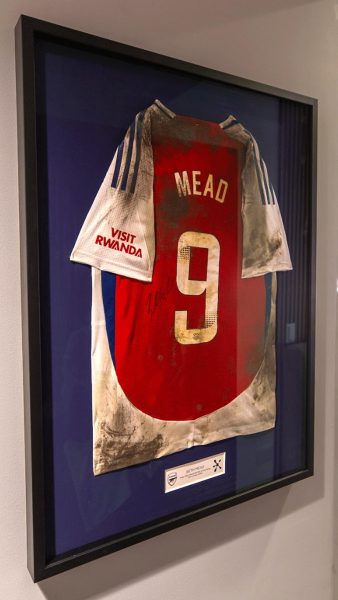
 Persil x ArsenalBringing "Every Stain Should Be Part of the Game" to life.
 Stories.Quick, easy reads about things we’ve been thinking, feeling and analysing lately. Get scrolling to keep up.
 AI Shopping and Black Friday 2026: Why Credibility, Not Choice, Will Close the SaleAsk most brands what AI will change about Black Friday and you'll hear some version of the same story: the bots are coming for the basket. Shoppers will ask an assistant for the best deal, and the assistant will buy it for them.Read more