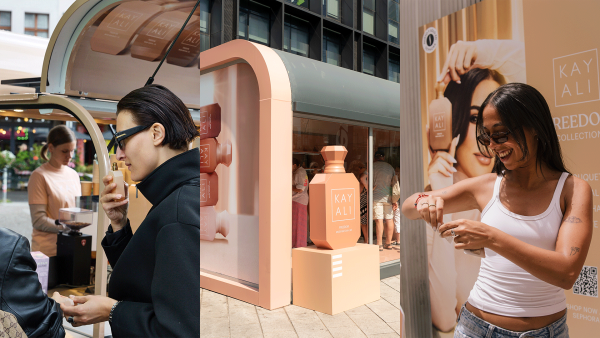
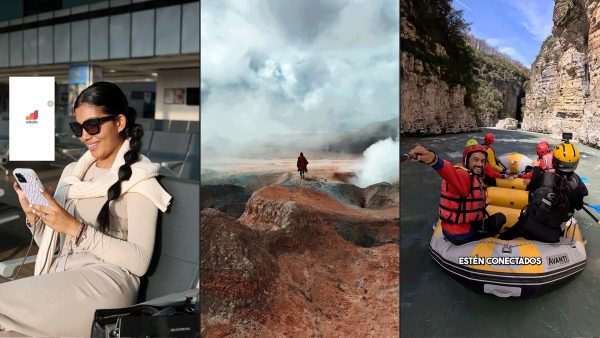
An experiential activation without digital amplification is a room full of people who had a good time and told no one. An influencer campaign without a physical anchor is content that performs once and fades. Neither is broken on its own. But when a brand runs both in isolation, it’s leaving the compounding effect on the table.
At MG Empower, integrated delivery across experiential and influencer marketing isn’t an upsell. It’s the model. We design activations where the physical experience generates the content, and the influencer strategy extends that content far beyond the room. The two formats feed each other, and the result is consistently stronger than either channel working alone.
The Problem with Running Channels in Parallel
Most brands treat experiential and influencer marketing as separate workstreams. One team builds the event. Another team books the creators. They happen at roughly the same time, in roughly the same place, but they aren’t designed as a single system.
The result is familiar. The event looks impressive. The influencer content looks polished. But the content doesn’t carry the energy of the experience, because the experience wasn’t built with content creation in mind. The influencers weren’t briefed around the activation’s narrative. The physical space wasn’t designed to produce shareable moments. What you get is two campaigns that happen to overlap, not one campaign that compounds.
When we design integrated campaigns, the experiential brief and the influencer brief are the same brief. The physical space is built to generate specific content moments. The creators are selected because their audiences align with the campaign’s strategic intent. The activation is the content engine; the influencers are the distribution network.
How This Works in Practice: Persil x Arsenal
Persil and Arsenal W.F.C. came to us with a campaign built around a real problem: research shows that six out of ten girls skip sports because of fear of period stains. The brief was to launch “Every Stain Should Be Part of the Game” in a way that would reach beyond traditional media.
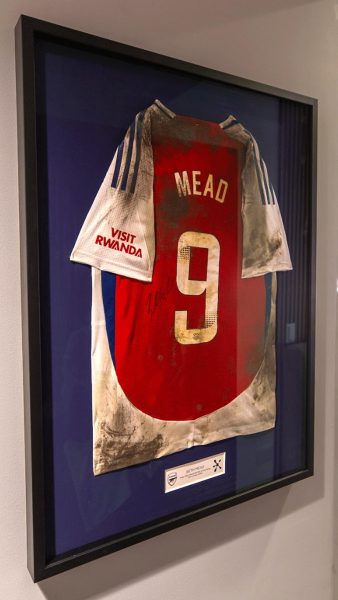
We designed an immersive activation inside the Emirates Stadium, taking over an exclusive box during Arsenal matches. The space was structured around four storytelling pillars: immersive branding featuring Beth Mead’s framed stained jersey, a Red Card Challenge using period Pantone cards, an interactive wall where guests wrote messages of encouragement, and a photo moment built around a washing machine setup designed specifically for social sharing.
Influencers, creators and changemakers were invited into the space not as attendees but as amplifiers. Every element of the physical experience was designed to produce content that carried the campaign’s message into their communities organically. The campaign generated 8.9 million views and impressions and more than 234,000 engagements.
What made those numbers work wasn’t the event alone or the influencers alone. It was the fact that the space was built to produce the content, and the creators were briefed to carry the message. Neither element would have delivered those results independently.
Sol de Janeiro: Two Days, Two Audiences, One Narrative
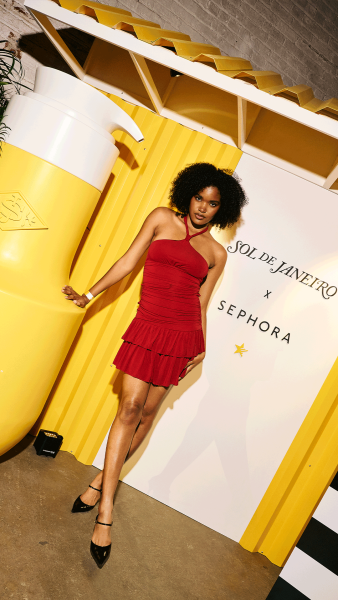
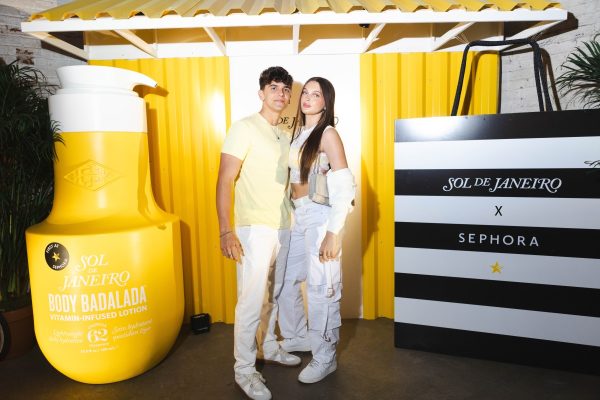
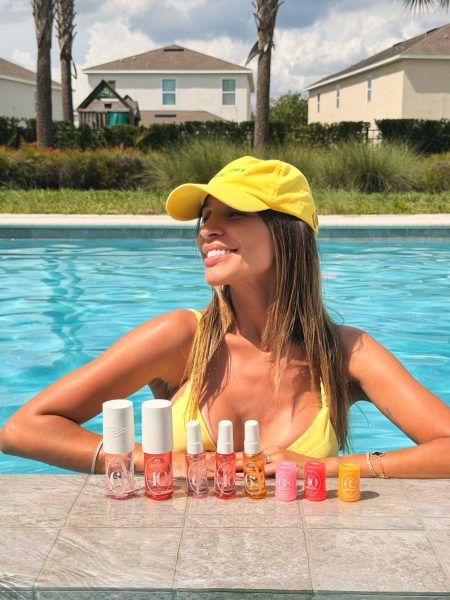
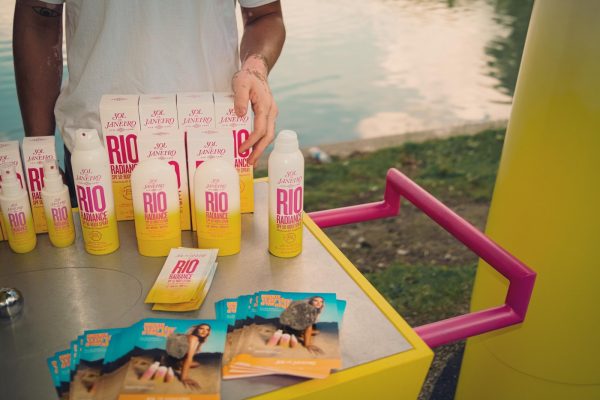
The Badalada launch for Sol de Janeiro took a different structural approach. We designed a two-day activation at 1896 Studios in Bushwick, New York, with each day serving a different audience through the same physical space.
Day one was a VIP experience for influencers and press: a three-hour immersion into the product through zones including a Benefits-Lab, a Badalada Tunnel, hand massage stations, roaming mist vendors and a Sephora photo opportunity. Street dancers and Batala drummers performed throughout. The experience was designed so that every touchpoint was both sensory and shareable. Creators didn’t need to manufacture moments; the space produced them.
Day two repurposed the installation for a public consumer event, which sold out through Eventbrite. More than 1,000 people attended across both days.
The integration point is worth noting. The influencer content from day one created social proof and anticipation that drove the consumer sell-out on day two. The physical experience generated the content; the content generated the demand. That’s the compounding effect in action.
Bumble x Botanikafe: Embedding the Brand in Culture
When Bumble wanted to launch its “We Have Mutuals” feature in Brazil, we didn’t build a standalone event. We took over Botanikafe locations in the Jardins and Pinheiros neighbourhoods of Sao Paulo for two weeks.
The takeover used light-touch branded interventions: yellow accents, co-branded awnings, custom artwork integrated into the existing cafe aesthetic. Three influencer-hosted Singles Events (a supper club, a games night, a party) ran across the period, each designed to embed Bumble into Sao Paulo’s existing social fabric rather than imposing a brand moment onto it.
The influencers weren’t just promoting the feature. They were hosting the experience, which meant their content came from genuine participation rather than a brief. The result was a scalable IRL model that Bumble can replicate across future markets, supported by an influencer strategy that travels with it.
Why the Integrated Model Outperforms
Three patterns hold across every integrated campaign we’ve run.
First, the physical experience produces content that influencer-only campaigns can’t replicate. A creator filming inside an activation produces something visually and emotionally distinct from a creator filming a product at home. The content quality is higher because the environment does the work.
Second, the influencer strategy extends the activation’s lifespan. An event runs for hours or days. The content produced inside it performs for weeks. The 8.9 million impressions from the Persil x Arsenal campaign didn’t happen during the match-day activation. They happened in the days and weeks that followed, as creators published and audiences engaged.
Third, integrated campaigns create attribution clarity. When the experiential and influencer elements are designed together, the content traces directly back to the activation. There’s no ambiguity about what drove the engagement.
When to Integrate and When to Run Separately
Not every campaign needs both. A product sampling programme doesn’t need an influencer layer. A creator-led social campaign doesn’t need a physical venue. The integrated model earns its place when the brand needs to create a moment that audiences experience physically and then carry digitally, or when the campaign’s message requires emotional engagement that content alone can’t deliver.
MG Empower’s experiential marketing service is designed for exactly these campaigns. We produce across 40 countries and 17 languages because integrated delivery at scale requires understanding local audiences, local creators and local cultural context simultaneously.
If your next campaign sits at the intersection of physical experience and digital influence, that’s where the conversation starts.
Get in touch with MG Empower to start the conversation.
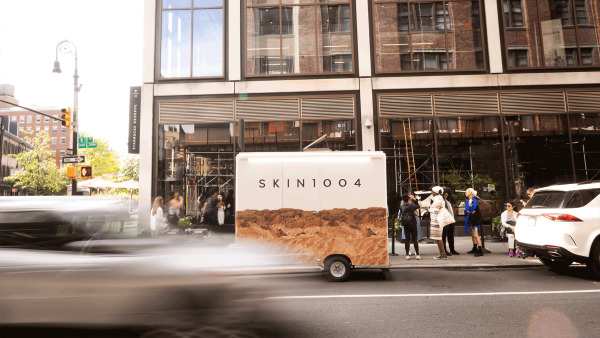
 SKIN1004 NYC launchTaking SKIN1004 to the streets: A citywide sampling experience driving buzz ahead of the NYC flagship opening.
 Persil x ArsenalBringing "Every Stain Should Be Part of the Game" to life.
 Stories.Quick, easy reads about things we’ve been thinking, feeling and analysing lately. Get scrolling to keep up.
 AI Shopping and Black Friday 2026: Why Credibility, Not Choice, Will Close the SaleAsk most brands what AI will change about Black Friday and you'll hear some version of the same story: the bots are coming for the basket. Shoppers will ask an assistant for the best deal, and the assistant will buy it for them.Read more