Most brands understand that influencer marketing works. Fewer understand why the same creator who drives results for one campaign falls flat in another. The answer almost always sits in how the selection was made: whether the brand found influencers who fit the brief, or whether they found influencers who fit the audience.
At MG Empower, influencer procurement is where the strategy earns or loses its credibility. Our database holds more than three million creators across nano, micro, mid, macro, mega and celebrity tiers, spanning 40 countries and 17 languages. But the database is the starting point, not the differentiator. What matters is how we move through it.
Why Tier Matters More Than Follower Count
The assumption that bigger audiences produce bigger results hasn’t held up for a while now. A nano creator with 8,000 followers and genuine authority in a niche community will regularly outperform a celebrity post that reaches millions but connects with very few of them.
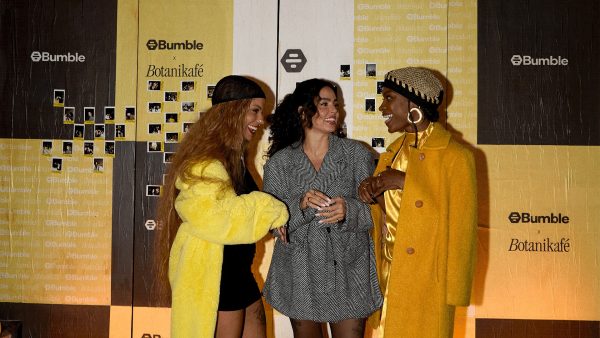
This is something we see consistently across campaigns. When Bumble needed to reach Black British audiences during Black History Month, we didn’t default to the biggest names. We assembled a multi-tier team of influencers, artists, actors, athletes and activists, each selected because they carried credibility within the specific communities Bumble wanted to engage. The campaign generated a 10% engagement rate, 20,000 organic shares and more than 75 media pieces. It also won awards at both the Influencer Marketing Awards and the Digiday Awards.
Scale mattered there, but not in the way most people assume. It came from the right people speaking to the right audiences, not from raw reach.
How We Identify the Right Creators
Our procurement process runs through six stages, each designed to reduce the gap between strategic intent and creator selection.
It starts with research. Before we open the database, we build a picture of the audience we need to reach: where they spend time, who they trust, what content formats hold their attention. This informs every filter we apply.
From there, we move into what we call Intelligent Procurement. This is where the 3M+ database comes in. We evaluate creators against performance metrics, audience demographics and brand alignment. We’re looking for creators whose audiences genuinely overlap with the brand’s target and whose engagement patterns suggest real community influence rather than inflated reach. Content style matters too: the creator’s output needs to sit naturally alongside the campaign’s creative direction.
Briefing follows procurement. This is where a lot of campaigns quietly fail. If the brief is too rigid, the creator’s authenticity disappears. If it’s too open, the brand message gets lost. We write briefs that give creators enough structure to stay on message and enough space to produce content that feels native to their platform and audience.
What Multi-Tier Actually Looks Like in Practice
The theory of multi-tier influencer marketing is well understood. The execution is where most agencies struggle, because managing across tiers means managing different content formats, different production expectations, different approval timelines and different performance benchmarks simultaneously.
Our Airalo campaign in LATAM is a useful example. We deployed 118 creators across six markets: Brazil, Mexico, Colombia, Argentina, Chile and Costa Rica. The brief was to drive awareness and app installs for Airalo’s eSIM product across audiences that had limited familiarity with the technology.
The tier mix was deliberate. We paired established travel creators (whose audiences trusted their product recommendations) with smaller, locally embedded influencers (whose content felt native to each market’s cultural context). Over three months, that combination produced 22.4 million organic views across 600 pieces of content. Two videos went viral, each hitting 2.5 million views in Brazil and Mexico respectively. App downloads tripled. CPA was optimised by 25% across the campaign window.
Those results didn’t come from celebrity endorsement. They came from a procurement process that matched each creator to a specific audience segment in a specific market, then layered the tiers so they reinforced one another.
Why Procurement Breaks Down at Other Agencies
The most common failure mode is procurement by shortlist. An agency has relationships with 200 creators. They pull 15 names for every brief, regardless of the audience. The content looks professional. The metrics look adequate. But the campaign doesn’t move anything because the creators were selected for availability, not alignment.
The second failure is tier mismatch. A brand invests its entire budget in two macro influencers when the campaign would have performed better with 30 micro creators producing platform-native content across multiple audience segments. The reach looks impressive in the report. The conversion doesn’t follow.
We’ve built our procurement model specifically to avoid both. Every campaign begins with audience research, not a rolodex. Every creator is evaluated against the strategic brief, not against their follower count or their relationship with the agency. And every tier decision is justified by what the campaign needs to achieve, not by what’s easiest to manage.
The Role of Data After the Campaign Launches
Procurement doesn’t end when the contracts are signed. We run real-time performance monitoring across every campaign, tracking engagement, sentiment and conversion as content goes live. When a creator in one tier is outperforming expectations, we can redistribute budget or amplify that content through paid support. When something isn’t landing, we adjust the brief or shift the tier balance.
This is what happened on the Badoo campaign. By integrating influencer content with meme marketing and paid amplification, we achieved a 23.6% engagement rate, well above typical benchmarks. That result came from ongoing optimisation during the campaign, not from getting the initial selection perfectly right on day one.
What This Means for Brands Choosing a Partner
The question isn’t whether an influencer marketing agency has access to creators. Most do. The question is whether the agency can match the right creator to the right audience at the right tier, then manage the complexity that multi-tier campaigns produce.
MG Empower’s influencer marketing service is built around that capability. We operate across 40 countries and 17 languages because influencer procurement at scale requires understanding local audiences, not applying a single market’s logic globally.
If your next campaign needs to work across tiers and across markets, that conversation starts with procurement. It’s where the strategy either holds or doesn’t.
Get in touch with MG Empower to start the conversation.
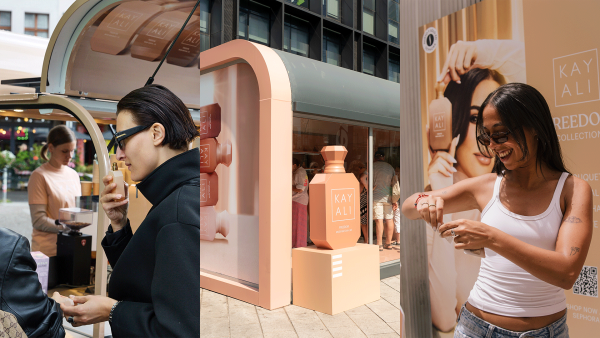
 SKIN1004 NYC launchTaking SKIN1004 to the streets: A citywide sampling experience driving buzz ahead of the NYC flagship opening.
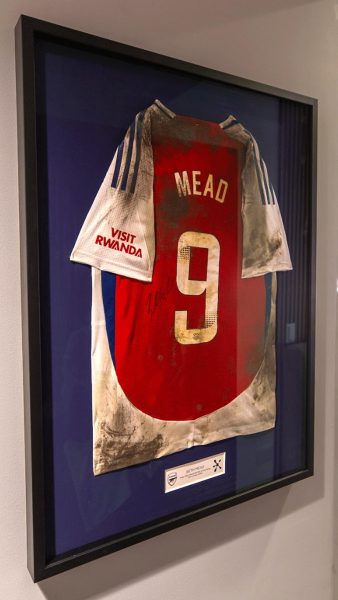
 Persil x ArsenalBringing "Every Stain Should Be Part of the Game" to life.
 Stories.Quick, easy reads about things we’ve been thinking, feeling and analysing lately. Get scrolling to keep up.
 AI Shopping and Black Friday 2026: Why Credibility, Not Choice, Will Close the SaleAsk most brands what AI will change about Black Friday and you'll hear some version of the same story: the bots are coming for the basket. Shoppers will ask an assistant for the best deal, and the assistant will buy it for them.Read more