There’s a version of the UGC conversation that most ecommerce brands have had internally, and it usually goes wrong in the same place. Somebody points out that user generated content converts better than brand content. Somebody else points out that it’s cheaper to source. A campaign gets built around a branded hashtag, a competition mechanic and a request for customers to share their purchases. Participation is modest, the content that comes in is inconsistent, and six months later nobody can explain what the programme actually achieved.
The diagnosis is almost always the same. The brand treated UGC as a content supply solution, when UGC is really a symptom. People create content about brands they have a relationship with, and a brand that hasn’t given anyone a reason to care hasn’t earned the participation it’s asking for. That’s why the most useful thing an ecommerce brand can learn from a social commerce agency isn’t how to run a hashtag campaign. It’s how to build the authority that makes people want to participate in the first place.
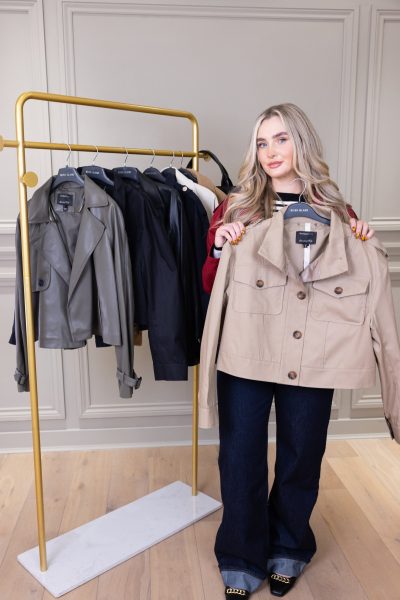
River Island’s social strategy is a useful case for retail specifically, because fashion retail is a category where the temptation to simply post product is strongest and the returns from doing so are weakest.
The brief that wasn’t about content volume.
River Island came to us needing more than a content refresh. The objective was a bespoke social media strategy that would boost the brand’s digital presence and engagement, and specifically position the brand as a fashion authority.
That phrase is doing a lot of work, and it’s worth pausing on because it reframes the entire task. A brand that posts its own products consistently is a catalogue. A brand positioned as a fashion authority is a source people consult, which is a fundamentally different relationship and one that changes what the audience does with the content. Catalogues get scrolled past. Authorities get followed, screenshotted, sent to a friend, and, eventually, bought from.
For a high street retailer, that’s a harder position to earn than it is for a luxury or aspirational lifestyle brand. Premium brands have scarcity and heritage to draw on. Accessible fashion has volume, speed and breadth, which are commercial strengths and weak content material on their own. The strategy had to find what was genuinely interesting about the brand rather than what was simply available to photograph.
That work runs through our social media agency practice: platform-specific insight, full editorial plans and content calendars, and continuous social listening that reshapes the plan as it runs rather than setting it once a quarter.
Why authority is the actual prerequisite for social commerce.
Social commerce gets discussed as a set of features: shoppable posts, in-app checkout, live shopping, product tagging. Those matter, but they’re plumbing. The reason a person buys something inside a social feed rather than moving to a search engine and comparing options is that they trust the source enough to shortcut their own process.
That trust has to exist before the shoppable link does. A brand with authority can put a product tag on a post and see it convert, because the audience already treats the account as a reliable guide. A brand without authority can add every commerce feature the platform offers and watch them underperform, because the feature was never the constraint.
This is the single most useful reframe for ecommerce teams evaluating a social commerce investment. The question isn’t which commerce features to enable. It’s whether your account has given anyone a reason to take its recommendation.
What Highland Park proves about the UGC sequence.
River Island’s case demonstrates the strategic principle. Highland Park’s demonstrates it with numbers, and although it’s a different category entirely, the mechanic is directly transferable.
The strategy was built on three editorial pillars: product storytelling, community engagement and nature-inspired aesthetics. The results were a 32% increase in engagement rate, over 34 million impressions and a reach of 34.9 million. The detail that matters most for ecommerce brands is what the case study says about how that happened: organic content became a significant driver of awareness, as user-generated content and influencer collaborations amplified brand conversations.
Read that sequence carefully. The UGC amplified conversations the brand had already started. It did not create them. The brand established three clear editorial territories, gave the audience something coherent to engage with, and the participation followed as a result of that structure rather than as a substitute for it.
Ecommerce brands routinely attempt the reverse: launch a UGC campaign to generate the conversation, then work out what the brand stands for afterwards. That order produces exactly the disappointing participation rates most brands report, because customers are being asked to contribute to something that doesn’t yet exist. We’ve written more on how that content structure gets built in the content framework behind Highland Park’s 34 million impressions, and on the community mechanics specifically in four simple steps to building a thriving brand community.
What this means practically for an ecommerce brand.
A few concrete implications follow, particularly for retailers with broad, accessible product ranges.
Define editorial territories before you define a hashtag. Three pillars is usually the right number. If your customers can’t articulate what your account is about, they have nothing to participate in.
Find the interesting thing that isn’t the product. Every retailer has something: how buying decisions get made, how a trend actually moves from runway to high street, styling knowledge that customers genuinely want. Fashion authority is built on knowledge, not inventory.
Sequence UGC after the story, not before it. Establish what you’re saying, build an audience that responds to it, then invite participation. The participation rate will be higher and the content will be more usable because contributors will understand the brief implicitly.
Treat the commerce layer as the last step. Product tags and shoppable formats convert an audience that already trusts you. They don’t manufacture that trust.
Judge the programme on engagement quality, not content volume. A UGC programme producing fewer but genuinely on-brand pieces is more valuable than one producing high volume that doesn’t fit anywhere.
Where UGC connects to everything else.
The practical difficulty for most ecommerce teams isn’t understanding any of this. It’s that the pieces sit in different places. The content team runs organic, a separate agency handles creators, someone in ecommerce owns the shoppable features, and paid sits elsewhere again. UGC falls between all of them, which is why it so often ends up as a campaign rather than a capability.
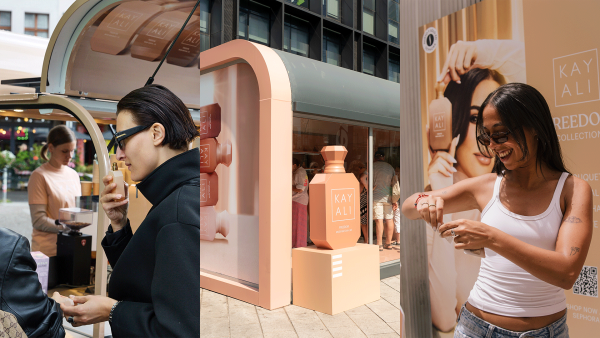
At MG Empower, that sits together: social and content development building the editorial structure, influencer marketing and multi-tier procurement bringing in creators whose audiences match the commercial objective, and paid amplification extending the content that proves it performs, all running from one integrated marketing strategy. For retailers that also need physical moments, experiential connects store and event activity back into the same content engine.
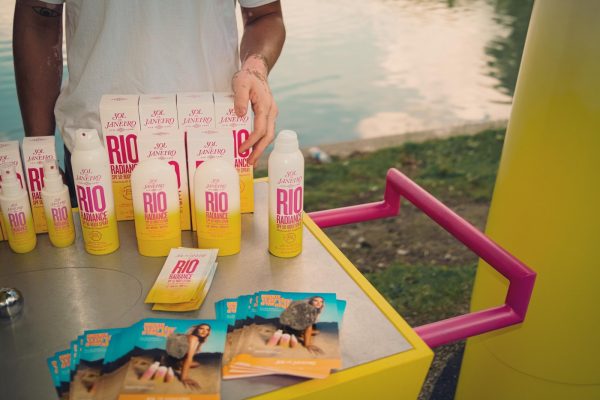
You can see the range across our case studies, including fashion retail with River Island, beauty with Sol de Janeiro and amika, and haircare with Tangle Teezer across Asian markets.
Frequently asked questions.
What is social commerce and what does it actually require? Social commerce is the practice of enabling discovery and purchase directly within social platforms, through shoppable posts, product tagging, live shopping and in-app checkout. The features themselves are straightforward to implement, but they convert only when an audience already trusts the account enough to act on its recommendation, which means brand authority is the real prerequisite rather than the technology.
Why do user generated content campaigns underperform for ecommerce brands? Usually because they’re launched before the brand has established a clear editorial identity worth participating in. UGC amplifies an existing conversation rather than creating one. Highland Park’s results show the correct sequence, where a three-pillar content strategy produced the conversations that user generated content and influencer collaborations then amplified.
Can a mass market retailer build the same social authority as a premium brand? Yes, though the route differs. Premium brands can draw on scarcity and heritage, while accessible retailers need to build authority through knowledge, styling expertise, trend interpretation and community rather than exclusivity. River Island’s strategy was specifically built to position the brand as a fashion authority rather than simply increase content output.
How should an ecommerce brand measure a UGC programme? On engagement quality and usability rather than volume. Useful measures include the proportion of submitted content that is genuinely on-brand and reusable, engagement rate on UGC compared with brand-produced content, and whether participation grows without repeated incentives, which indicates the community is self-sustaining rather than competition-driven.
Build the authority first.
If your UGC programme is producing thin participation, or your shoppable features are live and underperforming, the constraint is almost certainly upstream of both. Our team can map the editorial territories your brand should be building around before any hashtag or commerce feature enters the plan. Get in touch to talk it through.
MG Empower is a global integrated marketing agency founded in London in 2017, building social and content strategies for retail and ecommerce brands across more than 40 markets. To build authority that converts, get in touch with our team.
 SKIN1004 NYC launchTaking SKIN1004 to the streets: A citywide sampling experience driving buzz ahead of the NYC flagship opening.
 Persil x ArsenalBringing "Every Stain Should Be Part of the Game" to life.
 Stories.Quick, easy reads about things we’ve been thinking, feeling and analysing lately. Get scrolling to keep up.
 AI Shopping and Black Friday 2026: Why Credibility, Not Choice, Will Close the SaleAsk most brands what AI will change about Black Friday and you'll hear some version of the same story: the bots are coming for the basket. Shoppers will ask an assistant for the best deal, and the assistant will buy it for them.Read more