There’s a specific kind of frustration that comes with a brand account that’s doing everything right on paper. The photography is good. The posting cadence is consistent. The captions are on-brand. And the numbers stay stubbornly flat, month after month, while a competitor with worse production values somehow builds a following that actually talks back.
The difference is almost never production quality. It’s structure. Content that performs is content an audience can follow, where each post connects to something larger that the brand is consistently saying, rather than existing as a self-contained unit that happened to go out on a Tuesday. That’s the practical definition of brand storytelling, and it’s why working with a genuine brand storytelling agency produces different results from simply hiring someone to make more content.
Highland Park’s social transformation is a useful case to examine closely, because the brief contained a tension most heritage brands recognise immediately, and the solution was a framework rather than a creative flourish.
The problem: a loyal audience and no way to grow it.
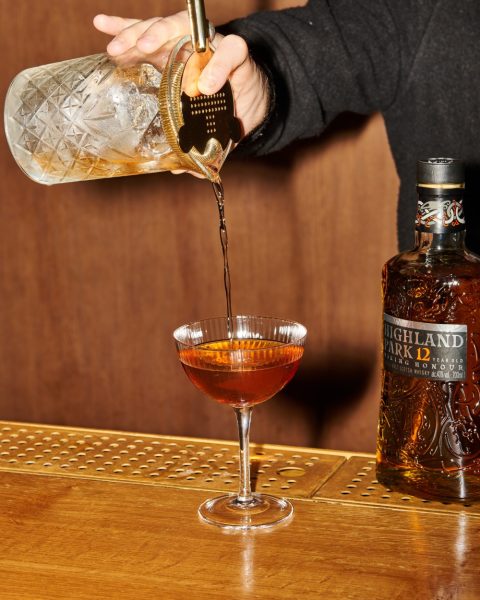
Highland Park is a whisky brand with genuine depth to draw on. It had established itself as a reference point in the whisky market, with a loyal fan base of connoisseurs and real differentiators, including being one of only a handful of distilleries still turning malt by hand.
What it didn’t have was a digital presence capable of doing anything with that. The brand’s social channels lacked the storytelling depth needed to attract and captivate a new generation of whisky enthusiasts, which left it in a position familiar to a lot of heritage brands: respected by the people who already knew it, and effectively invisible to everyone else. The challenge was to bridge the gap between Highland Park’s legacy and a modern, digital-first approach that could expand its audience while preserving its authenticity.
That last clause is where most heritage brands go wrong. The instinct when chasing a younger audience is to move away from the heritage, and the result is usually content that alienates the existing base without convincing anyone new. The framework had to do both jobs at once.
The framework: three editorial pillars, and everything maps to one.
Rather than a content calendar built around campaigns and product launches, the strategy was built around three key pillars: product storytelling, community engagement, and nature-inspired aesthetics, each aligned with the brand’s identity while making its content more immersive and relatable. In practice, these functioned as editorial umbrellas that every piece of content had to sit under, linking the product portfolio to different narratives rather than presenting it in isolation.
Pillar one: product storytelling.
The product is the most obvious thing a brand has to talk about, and usually the most poorly used. Product storytelling here meant connecting the whisky to the narratives around it: how it’s made, what makes it distinct, the specific and genuinely unusual details of its production. Highland Park’s heritage was incorporated into the content’s aesthetic, mixed with sensorial features that communicated the atmosphere around product development and branding.
This is the pillar that converts, because it gives an audience a reason to care about a specific bottle rather than a general impression that the brand seems nice. A detail like hand-turned malt isn’t a brand guideline footnote, it’s content, and it’s the kind of specific, verifiable detail that people repeat to other people.
Pillar two: community engagement.
A brand talking about itself is advertising. A brand talking with the people who care about it is a community, and communities compound in a way that campaigns don’t. This pillar covered the ongoing work of actively managing comments, responding to messages and fostering brand conversations, alongside structured mechanics such as user-generated content campaigns and interactive sessions that keep audiences invested rather than passively subscribed.
The payoff shows up in the results directly: organic content became a significant driver of awareness, as user-generated content and influencer collaborations amplified brand conversations. Note the sequencing there. The UGC amplified conversations the brand had already started. It didn’t substitute for a story the brand hadn’t yet told, which is the mistake brands make when they treat UGC as a content-supply solution rather than a sign that the storytelling is working. If community is the gap in your own strategy, four simple steps to building a thriving brand community goes deeper on the mechanics.
Pillar three: nature-inspired aesthetics.
The third pillar is the one most brands skip, and it’s often what separates a feed that feels like a brand world from one that feels like a catalogue. Highland Park’s visual territory drew on the landscape and atmosphere around the distillery, giving the content a consistent sensory identity through high-quality visuals, sensorial content and behind-the-scenes storytelling.
Aesthetics as a pillar isn’t decoration. It’s what makes a brand recognisable in a feed before anyone reads the caption, and it’s what makes individual posts feel like they belong to the same story rather than to the same logo.
The results: what a structured framework actually delivered.
The outcome was a 32% increase in engagement rate, over 34 million impressions, and a reach of 34.9 million. Organic content became a significant driver of awareness, and by transforming its social media presence into a dynamic platform for whisky enthusiasts, Highland Park strengthened its industry position and helped redefine how premium whisky brands engage in the digital space.
The number worth sitting with isn’t the impressions figure, it’s the engagement rate increase. Impressions can be bought. A 32% lift in engagement means the content became more worth responding to, which is the only metric that reliably indicates storytelling is actually landing rather than simply being distributed. Read the full Highland Park: A Successful Social Media Strategy case study for the detail behind the approach.
What transfers to your brand, whatever the category.
Whisky is a specific category with specific advantages, most obviously a genuinely interesting production story and a product with built-in sensory appeal. But the structural lessons hold across sectors.
Define your pillars before your calendar. Most content calendars are built from dates: launches, holidays, campaign windows. Building from editorial territories instead means every post has a reason to exist beyond the fact that it was scheduled. Three is usually the right number, enough range to avoid repetition, few enough to stay coherent.
Treat your least obvious asset as content. Every brand has an equivalent of hand-turned malt: a detail that internal teams consider operationally mundane and audiences find genuinely interesting. Those details are usually sitting in a factory, a sourcing decision, or a founder’s original constraint, and they’re almost always more compelling than another product beauty shot.
Sequence UGC correctly. User-generated content amplifies an existing story. It doesn’t create one. Brands that launch UGC campaigns before establishing what they’re actually about tend to get low participation and content that doesn’t cohere with anything.
Judge the framework on engagement, not volume. More content is the easiest response to underperformance and rarely the right one. A defined framework producing less content usually outperforms an undefined one producing more.
How this fits into a full content operation.
A framework only works if the production and distribution around it are set up to deliver it consistently. At MG Empower, storytelling strategy connects directly to social media content development and audio and visual production, so the pillars defined in strategy are actually what gets made, rather than an intention that dissolves during production.
It also connects outward. The Highland Park results depended partly on influencer collaborations amplifying the brand’s conversations, which is where a defined story becomes essential rather than optional: creators can only carry a narrative that exists in the first place. That’s the link between influencer marketing strategy, multi-tier influencer procurement and content strategy, and the reason we run them as one connected practice through our integrated marketing strategy rather than as separate services that meet at a status call. For brands that need the whole thing managed as a single operation, that extends into end-to-end campaign management.
Since we were founded in London in 2017, that integration has been the point. You can see the same structural thinking applied across very different categories in our case studies, from whisky to beauty to dating apps.
Frequently asked questions.
What is a brand storytelling framework? A brand storytelling framework is a defined set of editorial territories that every piece of content maps back to, so a brand tells a consistent, connected story instead of publishing unrelated posts. For Highland Park, MG Empower built the framework around three pillars: product storytelling, community engagement, and nature-inspired aesthetics.
How did Highland Park achieve 34 million impressions? Highland Park’s results came from an integrated social and creative strategy built on three editorial pillars, delivered through high-quality visuals, sensorial content and behind-the-scenes storytelling. The campaign produced a 32% increase in engagement rate, over 34 million impressions and a reach of 34.9 million, with user-generated content and influencer collaborations amplifying brand conversations organically.
How can a heritage brand modernise without alienating loyal customers? By treating heritage as the raw material for modern storytelling rather than something to move away from. Highland Park’s legacy, including details such as being one of only a handful of distilleries still turning malt by hand, was woven into contemporary formats and aesthetics, allowing the brand to attract a new generation of enthusiasts while re-engaging its existing base of connoisseurs.
Does brand storytelling actually drive measurable results? Yes, when it is structured rather than improvised. Highland Park’s storytelling-led strategy delivered a 32% engagement rate increase, 34 million impressions and 34.9 million reach, with organic content becoming a significant driver of awareness. The measurable outcome came from a defined editorial framework, not from producing a higher volume of content.
Build a story your content can actually follow.
If your content is well made and still underperforming, the problem is almost certainly structural rather than creative. Our team can look at what you’re publishing now and map out the editorial pillars your brand should be building around, using the same approach that reframed Highland Park’s presence. Get in touch to talk it through, or explore our full brand storytelling agency and social media agency in London offering to see how strategy, production and amplification fit together.
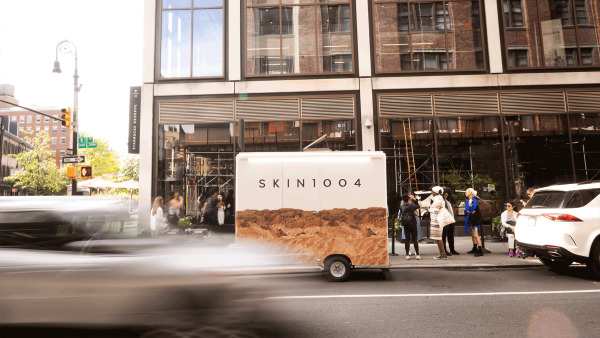
 SKIN1004 NYC launchTaking SKIN1004 to the streets: A citywide sampling experience driving buzz ahead of the NYC flagship opening.
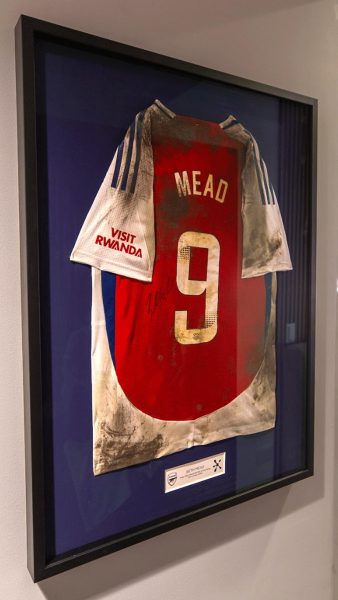
 Persil x ArsenalBringing "Every Stain Should Be Part of the Game" to life.
 Stories.Quick, easy reads about things we’ve been thinking, feeling and analysing lately. Get scrolling to keep up.
 AI Shopping and Black Friday 2026: Why Credibility, Not Choice, Will Close the SaleAsk most brands what AI will change about Black Friday and you'll hear some version of the same story: the bots are coming for the basket. Shoppers will ask an assistant for the best deal, and the assistant will buy it for them.Read more