Search “beauty influencer marketing ROI” and you’ll find a lot of confident numbers. A return of £X for every £1 spent. An average engagement rate for beauty as a category. A benchmark cost per acquisition that supposedly applies whether you’re launching a K-beauty brand in Manhattan or a frizz treatment in a saturated haircare market.
Those numbers aren’t fabricated, but they are close to useless for planning, because they average together campaigns with fundamentally different jobs. A campaign designed to make 8,000 New Yorkers physically try a product measures success differently from one designed to teach an audience how to use a treatment, which measures differently again from one designed to embed a brand in a cultural moment. Averaging them produces a figure that describes none of them.
A more useful approach, and the one a serious beauty PR agency in London should be able to offer, is to look at real campaigns of different shapes and understand what each was actually buying. Below are three, all beauty or haircare, all recent, all structured differently on purpose.
Benchmark one: SKIN1004, and the cost of entering a market where nobody knows you.
The shape: K-beauty brand entering the US market ahead of a permanent flagship opening in Soho, New York.
The problem with market entry in beauty is that skincare is a trust purchase. No amount of aspirational content substitutes for someone putting a product on their skin and deciding they like how it feels. So the campaign wasn’t built for reach first. It was built for physical trial, then reach.
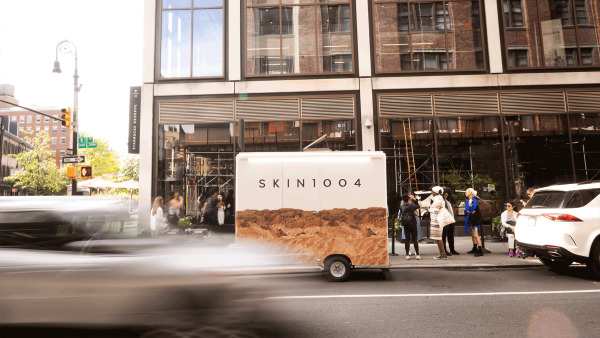
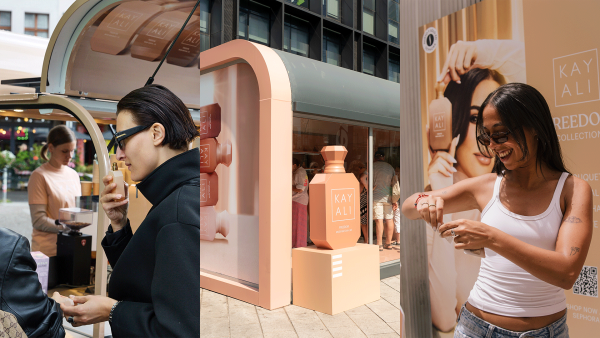
A teaser phase ran across September and October, with a travelling SKIN1004 sampling truck appearing in high-footfall neighbourhoods including Meatpacking and Williamsburg. Passersby sampled hero products alongside branded treats, vanilla and cinnamon-filled hotteoks inspired by the brand’s Centella ingredient story, which tied the giveaway to the actual product narrative rather than functioning as generic footfall bait. When the Soho flagship opened, an experiential press and influencer launch event bridged education, sensorial discovery and content creation moments.
The result: more than 8,000 consumers engaged directly with SKIN1004 across six sampling days. The mechanic worth stealing: sampling required guests to follow the brand to unlock the final product, which consistently drove spikes in social following during each activation window.
What this campaign was buying: first-hand product trial at volume, converted into a social following that persists after the truck leaves. If you benchmarked this campaign on impressions alone, it would look expensive. Benchmarked on qualified trial and owned-audience growth, it looks like the right structure for a brand nobody in the market had used yet.
Benchmark two: Sol de Janeiro, and what cultural relevance returns.
The shape: an established beauty brand embedding itself in specific cultural moments across markets.
Sol de Janeiro’s work spans several activations, and two are worth separating because they answer different questions.
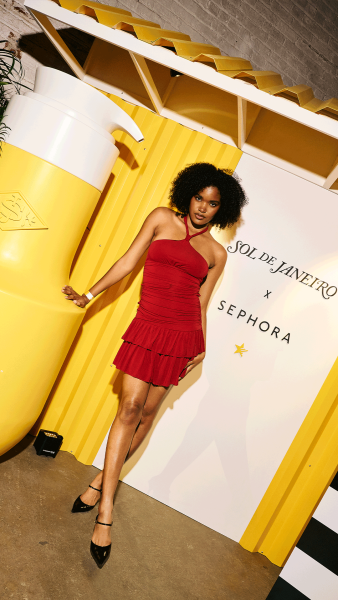
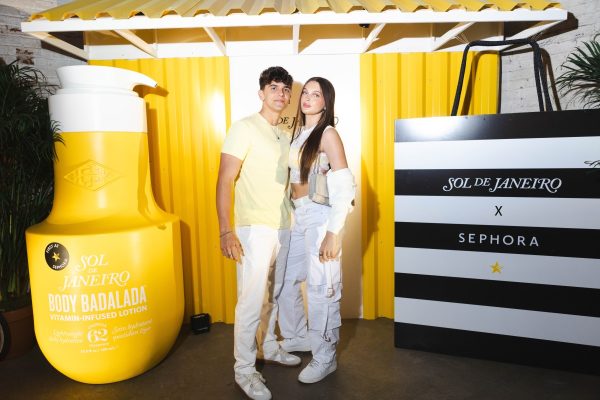
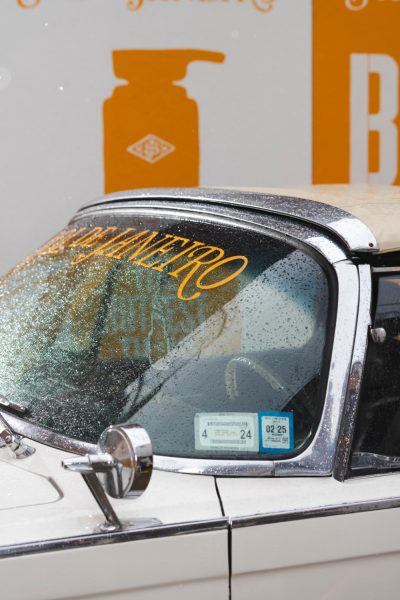
The Badalada launch used a two-day activation at 1896 Studios in Bushwick, New York, with each day serving a different audience through the same physical space: influencers and press on one, consumers on the other. Across the activation, 150 influencer and PR guests and 500 consumers came through a build that only had to be designed and paid for once. Running the creator day first meant content existed online before consumers arrived, so day two inherited anticipation rather than starting cold.
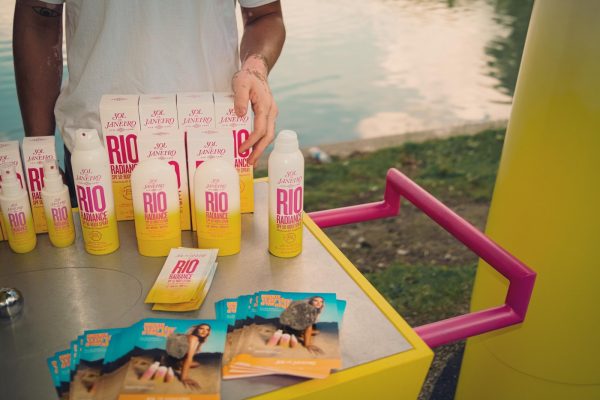
The Rio Radiance SPF launch, built around the Rio-Apply Kiosk, took the same instinct into a product launch and was shortlisted at The Drum Awards 2024 in the Experiential Activation to Launch a Brand or Product category. Industry recognition isn’t a performance metric, but for beauty brands where perception drives purchase, third-party validation carries a specific kind of value that engagement rates don’t capture.
Both sit alongside the brand’s Carnaval activations in Brazil, where the campaign had to work inside a cultural moment the brand didn’t own and couldn’t control.
What these campaigns were buying: cultural credibility and press-grade content, in a category where being seen as part of a moment matters more than being seen frequently. The 500-consumer number looks small next to SKIN1004’s 8,000 until you account for what each guest produced and who covered it.
Benchmark three: amika, and the return on education.
The shape: a haircare product launch where the barrier wasn’t awareness, it was understanding.
amika’s Smooth Over Frizz-Fighting Treatment promised smoother hair in 60 seconds, and the goal was to raise awareness of the new range in the US, engage audiences to discover more about it, and reinforce the brand’s positioning as a sustainable haircare option.
The structural decision here is the interesting one. Rather than briefing a single creator tier, the campaign used three editorial pillars: consumer, pro-influencer and pro-stylist, working with lifestyle, entertainment, hair stylist and hair content creators. Content was built around education, tutorials, reviews, hair journeys and how-to formats, deliberately covering both at-home and in-salon contexts and exploring professional tips around haircare.
That three-tier structure exists because haircare has a credibility hierarchy that most beauty categories don’t. A consumer’s before-and-after proves the product works for a real person. A professional stylist explaining why it works carries a different kind of authority, and reaches people who discount consumer content. Running both, plus the middle tier, means the campaign answers scepticism from more than one direction.
MG Empower’s own reporting on this campaign describes the outcome qualitatively rather than with a headline figure: the selection of digital talents combined with authentic storytelling produced a strong response and engagement rate, increasing the product’s relevance within the beauty community, and spanned a broad audience demographic with educational content.
What this campaign was buying: comprehension. For a product whose benefit needs demonstrating rather than asserting, an educated audience is worth more than a large one, and the ROI shows up later in the funnel than a launch-week dashboard captures.
Reading the three together.
Placed side by side, the honest conclusion is that there is no single beauty influencer marketing ROI benchmark, and any agency offering you one is either simplifying or selling.
What there is instead is a set of questions worth answering before a campaign starts.
What is the actual barrier? Trial, comprehension, credibility and cultural relevance are four different problems. SKIN1004 faced trial. amika faced comprehension. Sol de Janeiro faced relevance. The campaign shape follows from that answer, and so does the metric.
Which creator tiers does the category require? Haircare needs professional voices in a way fragrance largely doesn’t. Skincare benefits from long-form education. A multi-tier approach to influencer procurement matters more in beauty than in most sectors, precisely because credibility is distributed unevenly across tiers.
Does the campaign need a physical component? In categories where the product has to be felt, smelled or applied, digital-only campaigns hit a ceiling that no creative can solve. Both SKIN1004 and Sol de Janeiro built physical trial into the structure. That’s a brand activation decision as much as an influencer one.
When will the return actually appear? Education-led campaigns return later than trial-led ones. Judging an amika-shaped campaign on a SKIN1004-shaped timeline will make a functioning campaign look broken.
What to ask a beauty marketing agency.
If you’re evaluating agencies, the useful question isn’t “what ROI do you deliver for beauty clients.” Any agency can answer that with a flattering average. The better questions are what metric they’d propose for your specific barrier, which creator tiers they’d use and why, and whether they can show campaigns of genuinely different shapes rather than the same structure applied to every client.
Beauty and haircare work sits across our influencer marketing, experiential and social teams working from one integrated strategy, which is what allows a campaign to include a sampling truck, a stylist-tier creator programme and a paid layer without three separate agencies negotiating who owns the result. You can see the full range across our case studies.
Frequently asked questions.
What is a good ROI benchmark for beauty influencer marketing? There isn’t a single reliable one, because campaigns with different objectives return value in different forms. A market entry campaign should be measured on qualified product trial and owned-audience growth, an education-led product launch on comprehension and later-funnel conversion, and a cultural activation on press coverage, content output and brand perception. Applying one benchmark across all three will misrepresent at least two of them.
How many creator tiers should a beauty campaign use? It depends on where credibility sits in the category. Haircare benefits from a structure spanning consumer, pro-influencer and professional stylist voices, as used on amika’s Smooth Over campaign, because professional endorsement answers scepticism that consumer content cannot. Simpler categories may need fewer tiers.
Do beauty campaigns still need physical activations? In categories where the product must be felt, applied or smelled, yes. SKIN1004’s US entry engaged more than 8,000 consumers directly through six sampling days precisely because skincare is a trust purchase that digital content alone rarely closes.
How long before a beauty influencer campaign shows return? Trial-led campaigns show measurable results fastest, often within the activation window. Education-led campaigns build comprehension that converts later, and judging them on a launch-week dashboard tends to understate their actual contribution.
Work out what your campaign is actually buying.
If your last beauty campaign hit its engagement target and didn’t move the commercial needle, the likeliest explanation is a mismatch between the campaign’s shape and the barrier it was built to clear. Our team can map that out with you before any creator is briefed. Get in touch to talk through your next launch.
MG Empower is a global integrated marketing agency founded in London in 2017, working with beauty and lifestyle brands across more than 40 markets. To plan a campaign built around your actual barrier, get in touch with our team.
 SKIN1004 NYC launchTaking SKIN1004 to the streets: A citywide sampling experience driving buzz ahead of the NYC flagship opening.
 Persil x ArsenalBringing "Every Stain Should Be Part of the Game" to life.
 Stories.Quick, easy reads about things we’ve been thinking, feeling and analysing lately. Get scrolling to keep up.
 AI Shopping and Black Friday 2026: Why Credibility, Not Choice, Will Close the SaleAsk most brands what AI will change about Black Friday and you'll hear some version of the same story: the bots are coming for the basket. Shoppers will ask an assistant for the best deal, and the assistant will buy it for them.Read more