Every brand marketer has seen this pattern by now. A creator posts something genuinely good – on-brief, well shot, the right tone – and the metrics come back respectable but underwhelming. A few thousand views, a modest engagement rate, and then the post quietly disappears from anyone’s feed within 48 hours. Nothing went wrong exactly. The content simply hit the ceiling that organic reach puts on every piece of influencer content, no matter how strong.
That ceiling is the real reason so many influencer campaigns plateau. It isn’t a talent problem, and it usually isn’t a briefing problem either. It’s a distribution problem, and it’s one that a serious influencer marketing agency in London should be solving with paid amplification, not simply reporting on after the fact.
Why organic reach was never designed to carry a whole campaign.
Every major platform’s algorithm exists to keep people scrolling, not to guarantee a brand’s content finds its intended audience. A creator’s post reaches their followers in waves, gated by predicted engagement, and even a strong piece of content typically stalls out well short of that creator’s full following. That’s true whether the creator has ten thousand followers or ten million. Organic reach was never a mechanism built for brands. It was built for the platform’s own retention, and brand content is a passenger on that system, not the driver of it.
That’s not a criticism of organic content. It’s the reason organic and paid need to work together rather than as sequential afterthoughts. Blending influencer creative with media buying to appear at key moments of influence is a structural fix to a structural problem, and it changes what a campaign is capable of instead of just what it costs.
What paid amplification actually means in practice.
Strip away the jargon, and paid amplification is straightforward: putting media spend behind content a creator has already published, so it reaches people who were never going to see it organically. That can take a few different forms, each suited to a different stage of a campaign.
Boosting the content itself.
The simplest form is putting spend directly behind a creator’s post to extend its reach into new audience segments, targeted by interest, behaviour or lookalike modelling rather than left to whichever of the creator’s followers happen to be online.
Retargeting people who already engaged.
Influencer content performs a specific job in the awareness and consideration phases of a customer’s journey. Once someone has engaged with that content, retargeting them with the same creator featured in dedicated ads keeps that connection alive through exploration and evaluation, rather than letting the relationship end the moment they scroll past.
Aligning paid placement with campaign timing.
Amplification isn’t only about spend, it’s about timing. Aligning paid media placements with the moments a campaign needs the most visibility, a launch week, a cultural moment, a competitor’s misstep, means the content shows up when the audience is already paying attention, not three weeks after the conversation has moved on.
Proof, not theory: what amplification has actually delivered.
Frameworks are easy to describe in the abstract. What matters is whether pairing influencer content with paid distribution changes the outcome in a measurable way. Two campaigns make that case clearly.
Badoo. By integrating influencer content with meme marketing and paid amplification, the campaign achieved a 23.6% engagement rate, well above typical benchmarks for the category. That result came from ongoing optimisation during the campaign rather than getting the initial creator selection perfectly right on day one – amplification gave the team room to keep adjusting toward what was working, instead of living or dying on the first wave of organic reach.
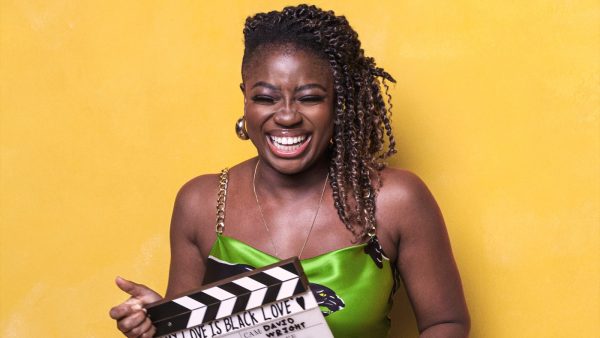
Bumble. When Bumble needed to reach Black British audiences during Black History Month, the approach didn’t default to the biggest available names. Instead, a multi-tier team of influencers, artists, actors, athletes and activists was assembled, each chosen for the credibility they carried within the specific communities Bumble wanted to engage, with amplification support extending that credibility beyond each creator’s own following. The campaign generated a 10% engagement rate, 20,000 organic shares and more than 75 media pieces – and won awards at both the Influencer Marketing Awards and the Digiday Awards. Scale mattered here, but it came from the right people speaking to the right audiences with the reach to match, not from raw budget alone.
Both campaigns point to the same underlying lesson: amplification doesn’t rescue weak content, but it does let genuinely strong content reach its full audience instead of a fraction of it. You can see the same connected thinking behind our multi-tier influencer procurement approach, which is where the right creator selection starts before amplification ever enters the picture.
Why this matters especially for tech and platform brands.
Tech and app brands feel the limits of organic reach more acutely than most categories, because their audiences are often younger, faster-scrolling and less loyal to any single platform. A campaign that depends entirely on organic distribution is competing directly with an algorithm optimised to serve that same audience an endless stream of alternatives. Our own client relationships in this space, including TikTok itself, sharpen the same instinct that runs through every amplification strategy we build: understanding not just how to make content that performs, but how a specific platform actually decides what gets seen and what doesn’t. That’s a different skill set from producing good creative, and it’s the one that turns a promising piece of influencer content into a campaign that actually reaches its audience.
What to look for in an agency that handles paid amplification properly.
The tell isn’t whether an agency mentions paid amplification in a pitch deck – most do. It’s whether the same team that built the influencer strategy also owns the media spend, or whether that’s a separate conversation with a separate supplier and a separate set of KPIs. When those two functions sit apart, amplification decisions get made too late, aimed at the wrong audience segment, or dropped altogether once the influencer content is delivered.
At MG Empower, that’s not how it works. Our dedicated Paid Amplification service sits inside the same influencer marketing function that selects, briefs and manages creators, supported by MG Media, our dedicated media planning and buying team, who procure everything from biddable social placements to out-of-home media as part of the same connected strategy. That’s what end-to-end campaign management actually means in practice: one team, one budget conversation, one set of objectives, rather than influencer content handed off to a media agency that had no part in choosing the creator or shaping the message in the first place.
Frequently asked questions.
What is paid amplification in influencer marketing? Paid amplification means putting media spend behind influencer content after it is published, so it reaches audiences beyond the creator’s own followers, rather than relying solely on organic reach. This can include boosting a creator’s post directly, retargeting people who engaged with it, or featuring the creator in dedicated paid ad units.
Why isn’t organic reach enough for influencer campaigns anymore? Organic reach on most platforms is capped by algorithms that prioritise content likely to keep users on the app, not content a brand has paid to have made. Even a well-matched creator’s post typically reaches only a fraction of their following organically, so a campaign that stops at organic distribution leaves most of its potential audience unreached.
What results has paid amplification delivered for MG Empower’s clients? On the Badoo campaign, integrating influencer content with meme marketing and paid amplification achieved a 23.6% engagement rate, well above typical benchmarks. Bumble’s Black History Month campaign, built on a multi-tier creator strategy with amplification support, generated a 10% engagement rate, 20,000 organic shares and more than 75 media pieces, and won awards at both the Influencer Marketing Awards and the Digiday Awards.
Should every influencer campaign use paid amplification? Not automatically. Paid amplification works best layered on top of content that has already proven it resonates organically, and applied with a clear objective, whether that is extending reach to a new audience segment, retargeting engaged users, or sustaining momentum after a campaign’s initial push. Spending on amplification before validating the content risks scaling something that was never going to perform.
Ready to make organic content work harder.
If your last influencer campaign delivered strong content but a disappointing reach number, the fix usually isn’t a bigger creator. It’s a distribution strategy that was never built to carry the content past its first, algorithmically-limited wave. Our team can look at what’s currently underperforming and show you exactly where amplification would change the outcome. Get in touch with our influencer and media team to talk it through, or explore our full influencer marketing agency in London offering to see how amplification fits inside a complete strategy.
 SKIN1004 NYC launchTaking SKIN1004 to the streets: A citywide sampling experience driving buzz ahead of the NYC flagship opening.
 Persil x ArsenalBringing "Every Stain Should Be Part of the Game" to life.
 Stories.Quick, easy reads about things we’ve been thinking, feeling and analysing lately. Get scrolling to keep up.
 AI Shopping and Black Friday 2026: Why Credibility, Not Choice, Will Close the SaleAsk most brands what AI will change about Black Friday and you'll hear some version of the same story: the bots are coming for the basket. Shoppers will ask an assistant for the best deal, and the assistant will buy it for them.Read more