It’s been ten years since Snapchat first burst onto the social media scene in a blaze of ephemeral glory. And in that time, there is no doubt that it has changed the social media landscape. Many of the features that would later become integral to the social media experience, such as filters, stories and ephemeral content, were first developed for the Snapchat platform.
However, despite its quick rise and rapid reshaping of the industry, in recent years the platform has taken a backseat to the likes of Instagram and, more recently, the giant that is TikTok.
“
However, while the days where it seemed like everyone you met was sending snaps might be a thing of the past, the company has been quietly marching forward.
”
However, while the days where it seemed like everyone you met was sending snaps might be a thing of the past, the company has been quietly marching forward.
New Growth
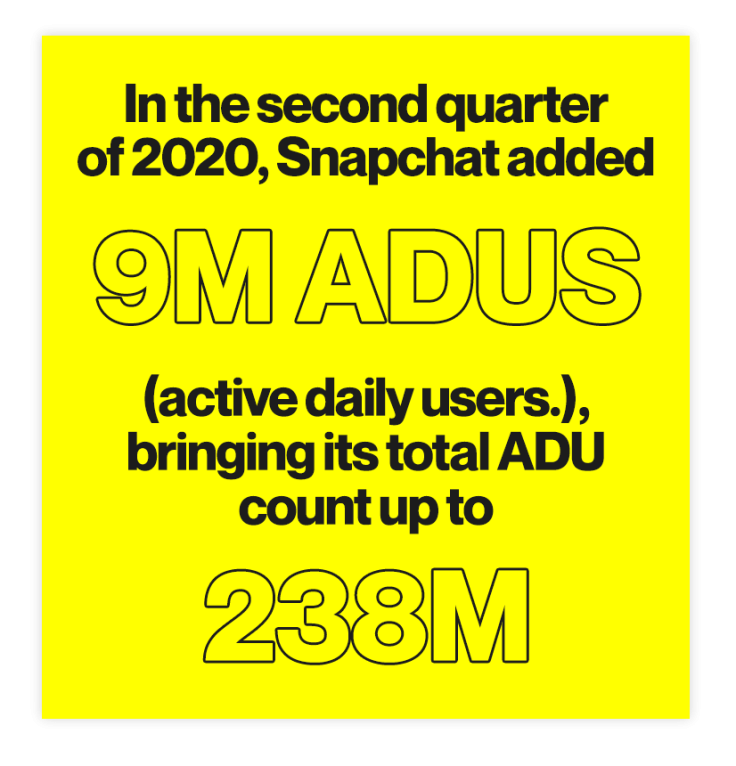
In the second quarter of 2020, Snapchat added 9 million ADUs (active daily users.), bringing its total ADU count up to 238 million. And while this might pale in comparison to Facebook, Instagram, and TikTok’s numbers, it’s nothing to scoff at.
Among the major social media platforms, Snapchat remains a player, as evidenced by the 210 million snaps created daily. But with fierce competition and new apps iterating on the formula that made Snapchat successful, how has the platform managed to remain relevant?
Well, through a combination of innovation and knowing their audience.
Catering to Youth
While social media as a whole tends to skew younger rather than older, this is especially true for Snapchat. Almost 70 percent of the 13 to 17 year-old demographic uses the app, closely followed by the 18-29 year-old demographic at 62 percent. And it’s these demographics that have helped the company to weather tough times, such as dropping stock prices in the wake of a poor IPO.
That’s because at its core, Snapchat has always been about the intimacy of its connection.
Created to address the issue of data permanence on the internet, the app immediately made an impact on young users.
Its focus on ephemeral content worked on two levels. In the age of social media where our digital identities are often public, it gave users back a sense of privacy and control. Furthermore, the impermanence of the content helped to create a more intimate experience around it.
Having images and stories only available for a set period of time, disappearing upon being viewed is a great way to raise engagement. But it’s not the only way.
Staying Relevant
In 2020, Snapchat rolled out a campaign focused on registering users to vote directly from the app. As of September 15th last year, 400,000 people had registered to voteon the platform.
This is a masterclass in not only staying relevant, but listening to your audience and knowing the climate. It’s no secret that the 2020 U.S election was about as politically charged as it could get. There were numerous messages and PSA’s across multiple channels urging citizens to get out and vote. Given that Snapchat’s users base skews under thirty, many of them might not have been registered or were voting for the very first time. Giving them a path to do this while driving downloads and traffic through their app was savvy.
Moreso, as we move further into the post-influencer era, apolitical mindsets for influencers and the users that follow them are becoming a thing of the past. Today’s generation of social media users are passionate about their values and unafraid to take a stance. Snapchat’s voter registration allows them to bring value to their users and the conversation, without trying to dictate it.
Continuing to Innovate
For many of us, Snapchat is synonymous with filters. However, filters weren’t actually a part of the first iteration of the app. It wasn’t until 2015 that the platform introduced the feature, under the named “lenses.” And the rest is history.
Just like “stories,” the innovative feature Snap had launched back in 2013, Filters quickly caught on. With Facebook incorporating both filters and stories, first into Instagram and then into its namesake brand, Snapchat has had to continue to find ways to differentiate itself from its competitors. And although its newer innovations aren’t the kind of game-changers that ushered in a new age of social media, they are more than enough to help continue to grow the apps user base.
For starters, Snapchat continues to develop the concept of filters. Over the years they’ve rolled out “Geofilters”, “World Lenses”, and more. But perhaps the biggest iteration they’ve made to the feature was opening it up to the users. The Snapchat Lens Studio allows users to create their own personalized filters for use on the app.
At a time when personalized experiences are in demand, Snapchat is giving users the ability to create their own.
From Software to Hardware
The company has also taken their AR-centric mentality and branched out into hardware. Snap recently launched their Spectacles 3 AR glasses, a wearable that allows users to take POV video and edit it in the app.
And while the latest version of the “Spectacles” seems to be more about pushing the possibilities of AR rather than pushing revenue —they are seeing a limited release—, they stand as yet another way Snap is working to diversify itself from its competitors while maintaining user interest.
The Takeaway for Brands
As a platform and a company, Snapchat has had its ups and downs over the years. But throughout all this, they’ve continued to push forward, and have been rewarded with growth and a loyal user base largely made up of the most influential demographics: millennials and Gen-Z.
Going forward, the purchasing power of these two groups will continue to increase. As a platform, Snapchat provides an alternative to Instagram TikTok and Facebook to connect in an authentic way with these users.
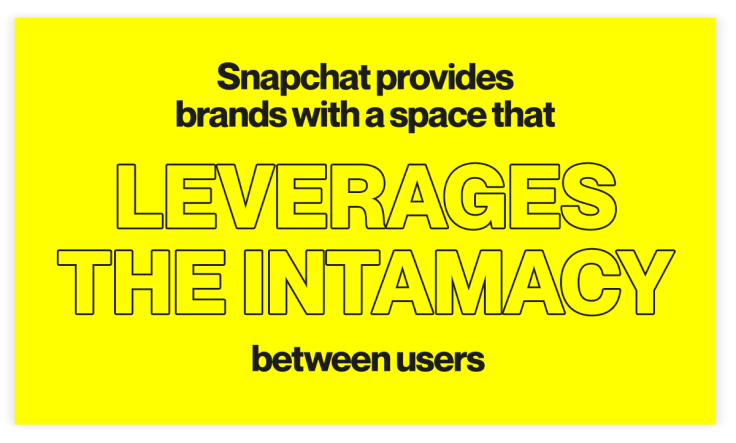
Influencer takeovers of brand channels have become the norm on the platform, proving more effective than polished, overproduced ads. In this way, Snapchat provides brands with a space that leverages the intimacy between users that has always been integral to the app.
And for brands whose audience skews younger or are looking to target millennials and Gen-Zers, Snapchat continues to be a powerful tool.
 SKIN1004 NYC launchTaking SKIN1004 to the streets: A citywide sampling experience driving buzz ahead of the NYC flagship opening.
 Persil x ArsenalBringing "Every Stain Should Be Part of the Game" to life.
 Stories.Quick, easy reads about things we’ve been thinking, feeling and analysing lately. Get scrolling to keep up.
 AI Shopping and Black Friday 2026: Why Credibility, Not Choice, Will Close the SaleAsk most brands what AI will change about Black Friday and you'll hear some version of the same story: the bots are coming for the basket. Shoppers will ask an assistant for the best deal, and the assistant will buy it for them.Read more