fbpixel Moral Marketing: Should brands take a stance? - MG Empower
MoralMarketing-Shouldbrandstakeastance[1]

Moral Marketing: Should brands take a stance?

Share

If you’ve had access to any sort of screen over the past two weeks, you’ve seen the images. Tear gas canisters lofted into crowds, streaming down in winding ribbons of noxious smoke. Streets aglow with the orange tinge of fire. Throngs of protesters clad in black, facing down police, holding signs that say “I can’t breathe” or “Say her name.” Amid the mounting pressure brought about by the pandemic and government imposed quarantine, the world suddenly caught fire. And amid the din of emotion and uncomfortable conversations, the cry of Black Lives Matter became a rallying point. It has united people across ethnicities, races and age groups, in a fight for equality and change. However, while the masses have been vocal in their calls to action, many brands have fallen silent.

But in the age of social media, silence will not do. The past is rife with examples of people coming together to hold corporate authorities accountable for unjust policies. The Montgomery Bus Boycott and the Delano Grape Strike are just a few examples. But the advent of digital space and digital identity have fundamentally changed the way we relate to authority and tipped the balance of power.

“

But the advent of digital space and digital identity have fundamentally changed the way we relate to authority and tipped the balance of power.

”

Social Media as Social Protest

Social Media has served as something of an equalizer. Ads no longer loom over the masses from billboards on high, they shift across feeds, prestigious brands occupying the same space as the users they interact with. This has made them more accessible than ever, with feedback from users expressed instantaneously through comments. Moreso, with an economy based on following, users have a direct impact on a brands platform because they make up that platform. All missteps are visible and can be met with immediate outrage. And because within our shared digital space information flows instantaneously and boundaries do not exist, it is much easier for the masses to assemble around any given cause and hold the brands accountable.

We’ve seen examples of this within the last month. From the influencer who turned a protest into a photo-op, to brands like Target and General Mills choosing to stay silent. The backlash has come swiftly in each case. But why?

Digital Identity: You Are What You Post

It comes down to the very nature of social media and digital space as an extension of self. In reality, a brand consists of many parts. It is the brick and mortar HQ, the masterminds in the marketing department, the accountants who approve the ad budgets, the broadcasters, the billboards, all of this to create a very top-down message. There is no dialogue. But on social media the equation is simplified and brand identity more holistic: you are what you post.

Furthermore, statistics show that a growing percentage of users expect brands to engage with them. So when the conversation became about how Black Lives Matter and why, it is easy to see how a brands’ silence or continued efforts to push merchandise and campaigns would be framed as an affront to the sense of community that defines our shared digital space.

Avoiding Hollow Solidarity

In the aftermath of the protests, social media channels were flooded with black squares in solidarity. Many brands, recognizing the price of silence, joined in and posted their own black squares on their feed. However, these actions were largely viewed as performative and the hashtag “Open Your Purse” quickly began trending. It called on brands and influencers who benefit from the increased exposure social media provides, to do more. The hashtag was at once a rebuke of the hollow solidarity that costs nothing to partake in, and an acknowledgement that, even in a digital space where we are all more directly connected, disparities still exist.

In this day and age it is not just enough to take a moral stance on something, users across social media are calling for brands to put their economic clout behind causes like BLM. Some brands are even putting their bodies into it.

In 2016, the founders of Ben and Jerry’s Ice Cream were arrested at a Black Lives Matter protest. This history of solidarity with the cause informed a recent statement the company released concerning the current protests. And THAT is how it is done. The statement doesn’t just stop at calling for solidarity and championing BLM, ‘it calls for reform and outlines steps to get there. This kind of authenticity was well received across social media and has quickly become the standard which brands are held to.

The Risk of Taking a Stance

But for many brands taking a stance on the issues, whether they be BLM or climate change, can be tricky. These topics tend to be polemical and taking a stance for or against something can very easily alienate an entire demographic. But what we have learned from the BLM movements’ impact on brands and influencers alike, is that silence will cost you as well, so you might as well be on the right side of history.

No one is saying for all brands and influencers to go the Ben & Jerry’s route and have their CEO’s get arrested, although it might not hurt. But if you are still asking yourself should brands take a stance, that answer is simply, yes, they can’t afford not to.

Read more.

20261021-143951
AI Shopping and Black Friday 2026: Why Credibility, Not Choice, Will Close the Sale

Ask most brands what AI will change about Black Friday and you'll hear some version of the same story: the bots are coming for the basket. Shoppers will ask an assistant for the best deal, and the assistant will buy it for them.

Read more.

CS_Airalo
Paid Media Meets Influencer Marketing: How We Amplify Campaigns Beyond Organic Reach.

The content is good, the creator is right, the engagement rate is respectable, and then the post simply stops reaching people, because every major platform's algorithm exists to keep users scrolling rather than to guarantee a brand's content finds its intended audience.

Read more.

9K1A2083 (1)
How MG Empower Turns Cultural Insight Into Brand Growth: A Culture-Led Marketing Framework.

Every agency says culture matters. Very few can answer the follow-up question: how would you know if a campaign failed on cultural terms while hitting all its media targets?

Read more.

Cropped Trenches-2
UGC and Social Commerce for Ecommerce Brands: What River Island’s Social Strategy Teaches.

There's a version of the UGC conversation that most ecommerce brands have had internally, and it usually goes wrong in the same place. Somebody points out that user generated content converts better than brand content. Somebody else points out that it's cheaper to source.

Read more.

WhatsApp Image 2026-06-27 at 21.16.43
AI in Influencer Marketing: How MG Platform Picks the Right Creator, Not Just the Biggest.

Almost every agency is publishing something about AI right now, and most of it says the same thing: AI is transformative, it will change everything, brands should prepare.

Read more.

CS_BUM_1
Enterprise Influencer Campaigns That Actually Move the Needle: Inside Bumble’s Award-Winning Black History Month Campaign.

There's a particular way that large brands get influencer marketing wrong, and it isn't the way people expect. Enterprise campaigns rarely fail on execution.

Read more.

CS_Badoo
Influencer Marketing for Tech and App Brands: What Badoo’s 23.6% Engagement Campaign Proves.

There's a structural problem in marketing an app or a tech product through influencers that most agencies underestimate.

Read more.

Copy of DSCF0419 (1)
Beauty Influencer Marketing ROI: Real Benchmarks From SKIN1004, Sol de Janeiro and amika.

What beauty influencer campaigns actually return, benchmarked against three real launches for SKIN1004, Sol de Janeiro and amika across different markets.

Read more.

240129HighlandPark675 (1)
Brand Storytelling That Converts: The Content Framework Behind Highland Park’s 34 Million Impressions.

There's a specific kind of frustration that comes with a brand account that's doing everything right on paper. The photography is good. The posting cadence is consistent. The captions are on-brand. And the numbers stay stubbornly flat, month after month, while a competitor with worse production values somehow builds a following that actually talks back.

Read more.

9K1A1273 (1)
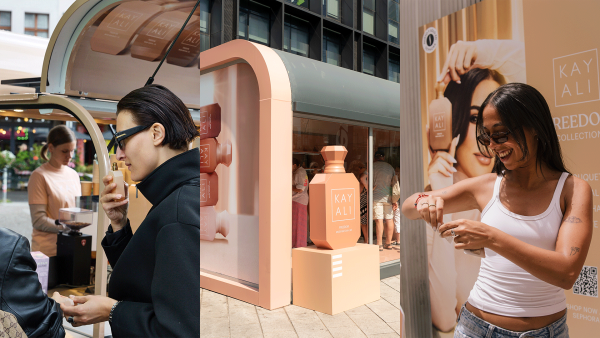
Brand Activation in London: How MG Empower Bridges Offline Experiences With Digital Amplification.

London runs on brand activations. In any given month there's a pop-up in Shoreditch, a launch party in Mayfair, an immersive room somewhere in Hackney Wick, and a stadium takeover that cost more than most annual marketing budgets. Most of them are well produced.

Read more.

How can we empower your brand?

LET’S CONNECT

© MGEmpower 2026
PART OF
Get in Touch