Almost every agency is publishing something about AI right now, and most of it says the same thing: AI is transformative, it will change everything, brands should prepare. None of that is wrong and none of it is useful, because it describes a direction rather than a decision anyone can act on.
The more interesting question for influencer marketing is narrower. Creator selection is the single point where campaigns are most often quietly decided, and it’s also where the industry’s default method is weakest. 73% of marketers cite finding the right influencers as their biggest challenge. Not briefing them, not measuring them, not negotiating with them. Finding them.
That’s the specific problem AI is genuinely good at, and it’s worth understanding mechanically rather than as a trend.
Why follower count became the default, and why it fails.
Follower count survives as the primary selection metric for one honest reason: it’s visible. Everything that would actually predict a campaign’s performance sits below the surface.
Finding an influencer may seem simple, but truly understanding their audience, and how that audience engages with content, is the real struggle. Audiences are complex and multi-faceted, and limiting a search to a single vertical is rarely the most effective approach. A beauty campaign’s best-performing creator might sit in food or travel, with an audience whose overlap with the brand’s target is invisible to anyone browsing by category.
That’s the structural weakness. Manual selection can only sort by the attributes a human can see, which means it systematically overweights size and category and underweights fit. The result is campaigns that reach large numbers of the wrong people and report respectable-looking metrics while doing very little.
What predictive analytics actually does differently.
The meaningful shift isn’t automation, it’s direction. Traditional selection starts with available creators and asks which look promising. A predictive model starts with the desired outcome and works backwards to forecast which creators will help achieve it.
That’s the core of the approach: combining AI and ML, social listening and access to vast creator databases to work backwards from a target outcome. The smart recommendations these models generate let brands strategise selections rather than assemble them, and post-campaign insights feed the next campaign’s forecasting, so each round of selection is better informed than the last.
Sitting underneath that is Social Network Analysis, which maps how audiences actually connect rather than simply counting them. Two creators with identical follower counts can have completely different network structures, one reaching a broad but shallow spread, the other sitting at the centre of a tightly connected community where content travels between members. For campaigns that depend on conversation rather than impressions, that structural difference matters far more than the headline number.
Contextual analysis: reading content for what’s in it.
The capability that most changes day-to-day selection work is less discussed. Contextual analysis uses image-to-text capability to convert social content, such as short-form video, into textual descriptions
The practical consequence is significant. Video has historically been close to opaque at scale, accessible only by watching it, which means creator vetting on video-first platforms has always been a sampling exercise. Converting video content into text makes it searchable, categorisable and analysable in volume. A brand can assess what a creator’s content actually contains, the settings, the themes, the products handled, the tone, rather than inferring it from bio text, hashtags and a handful of viewed posts.
For brand safety, that changes the reliability of vetting. For selection, it means fit can be assessed on substance instead of self-description.
The phase most brands leave unmanaged.
Predictive analytics before a campaign and reporting after it are both now reasonably common. The gap sits between them.
The question worth asking is what happens while a campaign is still live. During campaign execution, we track performance in real time, using live data to optimise influencer content, adjust media placements and refine messaging as campaigns run. That matters because influencer campaigns are one of the few marketing formats routinely left unmanaged once launched. Paid media gets optimised daily. Influencer campaigns are frequently briefed, delivered and then reviewed afterwards, by which point the budget is spent.
Real-time optimisation changes what a campaign can recover from. If one creator tier is outperforming forecast and another is lagging, that’s actionable while there’s still budget to reallocate. Badoo’s “Find Something Real” campaign is a useful example of the principle, where ongoing optimisation during the campaign, rather than perfect selection on day one, contributed to a 23.6% engagement rate, well above the typical influencer range of roughly 1% to 15%.
Where data sits in the process, end to end.
Data isn’t a stage in our campaigns, it runs through all of them.
At the strategy stage, social listening, competitor benchmarking, audience profiling and cultural analysis build data-informed campaign blueprints. For influencer procurement, advanced analytics assess audience demographics, geographic reach, engagement authenticity, content quality, historic performance and brand fit, so selection is strategic rather than based on follower count alone. During execution, performance is tracked live. Afterwards, reporting goes beyond vanity metrics to cover quantifiable KPIs, cultural impact, influencer benchmarking and forward-looking recommendations that inform the next campaign.
That process draws on a database of 3M+ global influencers across every tier, and for multi-market work, a network across 40+ countries and 17 languages that allows identification of creators with genuine local credibility rather than simply those posting in the right language. That last distinction is one no amount of data solves on its own.
More on that process sits in our intelligent influencer procurement approach and in how multi-tier procurement works from nano to celebrity.
Where AI stops being useful.
Any honest account of this has to include the limits, and they’re not incidental.
AI is very good at narrowing a field of three million creators to a shortlist that fits a set of measurable criteria. It is considerably less good at judging whether a creator has genuine standing inside a cultural moment, whether a partnership will read as credible or opportunistic, or whether a creative idea will land.
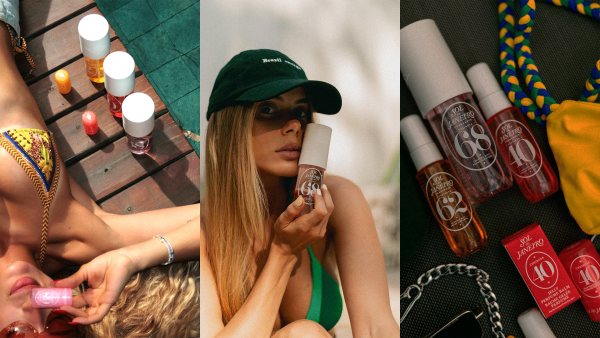
Sol de Janeiro’s World Cup 2026 programme is the clearest recent illustration. The World Cup is the largest and most crowded attention spike in the global calendar, and the campaign was built as a creator programme around the moment rather than a brand campaign placed alongside it. Seven creators produced 32 pieces of content, each capturing authentic World Cup moments with the brand embedded inside the conversation rather than layered on top of it.
The results: 19.2M total impressions and views, a 7% in-feed engagement rate and over 403K total engagements, with sentiment staying highly positive throughout and comments actively asking for product links and discount codes.
No predictive model produces that shortlist. The selection criterion wasn’t a measurable attribute, it was a judgement about which creators were already genuinely part of the conversation, so that the brand appeared inside moments audiences were sharing anyway. Analytics can confirm a creator’s audience overlaps with a brand’s target. It cannot tell you whether that creator belongs in a specific cultural moment, and belonging is what produced the purchase intent visible in those comments.
The same holds on the conversion side. Airalo’s three-month LATAM campaign optimised CPA by 25% and saw app downloads triple after the campaign ended, with saves and shares serving as the leading indicators that predicted it. Data identified those signals. A human decided the campaign should be measured on them rather than on in-campaign installs alone.
That’s the honest division of labour. The technology handles scale, pattern recognition and real-time optimisation. Human cultural analysis handles judgement. Agencies claiming AI has replaced the second are describing a product they’d like to sell rather than how good campaigns actually get made.
We set out this position publicly rather than only internally. At Web Summit Lisbon 2024, alongside 70,000 attendees, we hosted a masterclass, “From Fiction to Facts: AI’s True Role in Influencer Marketing,” led by Joe McElligott, our Head of Strategy & Creative, and Andrea Cortes, our Senior Insights & Strategy Manager, unpacking the myths, realities and future of AI in the category. The full session write-up covers the argument in more depth.
What to ask an agency about its AI capability.
Most agencies now claim data-driven selection. A few questions separate genuine capability from a licensed third-party dashboard.
What data actually informs selection? The answer should name the signals, audience demographics, engagement authenticity, content quality, historic performance, brand fit, not just assert that the process is data-led.
What happens mid-campaign? If the answer covers pre-campaign selection and post-campaign reporting only, the campaign is running unmanaged for its entire live period.
How is video assessed at scale? Without contextual analysis, video-first creator vetting is sampling, however large the database.
Where does human judgement enter, and who does it? An agency that can’t answer this precisely is either overstating its technology or under-resourcing its strategy.
This sits inside our wider influencer marketing practice and connects to social, paid amplification and integrated strategy, because selection intelligence is only worth as much as the campaign built around it. You can see the outcomes across our case studies.
Frequently asked questions.
How does AI improve influencer selection?
By assessing signals that manual selection cannot see at scale, including audience demographics, engagement authenticity, network structure and the actual content of a creator’s videos. Predictive models work backwards from a desired campaign outcome to forecast which creators will deliver it, rather than starting from whichever creators are visible and well known.
What is contextual analysis in influencer marketing?
Contextual analysis uses AI image-to-text capability to convert social content, such as TikTok videos, into textual descriptions that can then be searched and analysed at scale. It allows brands to assess what a creator’s content genuinely contains rather than relying on bio descriptions, hashtags or a small sample of manually reviewed posts.
Can AI replace human judgement in choosing influencers?
No. AI is effective at narrowing large creator pools against measurable criteria and at optimising performance during a live campaign. It is not reliable at judging cultural belonging, which is why a programme like Sol de Janeiro’s World Cup 2026 activation depended on human selection of creators already genuinely part of the conversation.
How is data used across a campaign?
At the strategy stage through social listening, competitor benchmarking, audience profiling and cultural analysis; during procurement through advanced analytics on audience and brand fit; during execution through real-time performance tracking and optimisation; and afterwards through reporting that covers KPIs, cultural impact and recommendations for the next campaign.
Stop selecting creators by the only number you can see.
If creator selection on your campaigns still starts with a follower threshold and a category filter, the shortlist is being shaped by what’s easy to sort rather than what predicts performance. Our team can walk through what a data-led selection process would surface for your next campaign. Get in touch to talk it through.
MG Empower is a global integrated marketing agency founded in London in 2017, combining data-led selection with human cultural judgement across more than 40 markets.To build a campaign on better selection, get in touch with our team.
 SKIN1004 NYC launchTaking SKIN1004 to the streets: A citywide sampling experience driving buzz ahead of the NYC flagship opening.
 Persil x ArsenalBringing "Every Stain Should Be Part of the Game" to life.
 Stories.Quick, easy reads about things we’ve been thinking, feeling and analysing lately. Get scrolling to keep up.
 AI Shopping and Black Friday 2026: Why Credibility, Not Choice, Will Close the SaleAsk most brands what AI will change about Black Friday and you'll hear some version of the same story: the bots are coming for the basket. Shoppers will ask an assistant for the best deal, and the assistant will buy it for them.Read more