There’s a particular way that large brands get influencer marketing wrong, and it isn’t the way people expect. Enterprise campaigns rarely fail on execution. They have the budget, the legal review, the measurement infrastructure and the agency support. What they lose, somewhere between the original brief and the final approval, is the thing that would have made anyone care.
The process itself produces this. Every stakeholder softens one edge. Legal removes a claim. Brand safety flags a creator. Regional teams request adjustments. By launch, the campaign is unobjectionable to everyone inside the business and unremarkable to everyone outside it. The metrics come back exactly as forecast, and the brand’s position in the culture hasn’t moved at all.
The campaigns that avoid this share one property: they start from something true and specific, and the organisation protects that specificity through the approval process rather than sanding it away. Bumble’s #MyLoveIsBlackLove is a useful case study precisely because it’s a campaign that could easily have been flattened, and wasn’t.
The insight the campaign refused to soften.
Most enterprise campaigns begin with a business objective and reverse-engineer a creative idea to serve it. This one began with research, and the research was uncomfortable.
Bumble’s own findings showed that more than half (57%) of Black people in the UK have experienced racism or racial bias while on a date. That’s not a marketing insight in the conventional sense. It’s a statement about a genuine problem inside the exact experience Bumble’s product exists to facilitate, and a brand with less conviction would have moved swiftly toward something more celebratory and less pointed.
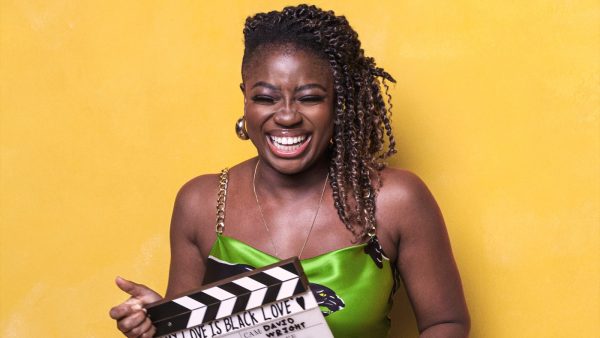
Instead, Bumble asked us to help create #MyLoveIsBlackLove, a YouTube series celebrating what Black love really means in Britain today. For Black History Month 2020 and 2021, Bumble UK tasked us with assembling a team that would amplify the voices of the Black British community, drive awareness and traffic to the series living on Bumble’s YouTube channel, promote Black History Month, and position Bumble as a key voice in that conversation.
Note the order of those objectives. Amplifying community voices comes first, and the brand positioning objective comes last. That sequencing is unusual for an enterprise brief, and it’s a large part of why the campaign worked.
Why the creator selection mattered more than the creator reach.
The default enterprise instinct when a campaign needs scale is to buy it: the largest available creators, the broadest possible audience, the highest aggregate follower count that the budget supports. It’s defensible in a planning meeting and it consistently underdelivers on campaigns where credibility, rather than visibility, is the actual barrier.
For this campaign, we engaged a team of influential Black British people to share raw love stories and experiences, reinforcing Bumble’s commitment to inclusion and visibility. The selection criterion was standing within specific communities, spanning artists, actors, athletes and activists, rather than follower count. That matters because the campaign was asking its audience to trust that a dating app was engaging with racism in dating in good faith, and that trust could only be extended by people the audience already believed.
This is where enterprise campaigns most often go wrong at the procurement stage. A creator with ten million followers who has no established relationship with the subject matter doesn’t lend credibility to a campaign, they borrow it from one, and audiences detect that immediately. A multi-tier approach to influencer procurement exists precisely so that reach and credibility can both be planned for, rather than one being sacrificed for the other by default.
The results, and what each number actually tells you.
The campaign delivered a 10% engagement rate, 20,000 organic shares and more than 75 media pieces, and won at both the Influencer Marketing Awards and the Digiday Awards.
Those four numbers are worth reading separately, because each answers a different question about whether an enterprise campaign worked.
The 10% engagement rate indicates the content was worth responding to rather than simply distributed. At enterprise scale, engagement rates typically fall as reach rises, because broad targeting reaches people with no particular relationship to the message. A 10% rate at this scale suggests the audience was reached precisely rather than broadly.
The 20,000 organic shares is the number that most directly measures whether a campaign earned its position. Shares are audiences volunteering to attach their own name to a brand’s message. That’s a materially different signal from a like, and it’s the one enterprise brands should watch most closely on culture-facing campaigns, because it’s very difficult to manufacture.
The 75+ media pieces demonstrates the campaign was newsworthy in its own right, not just visible. Earned coverage at that volume means editors judged the campaign to be a story, which is a meaningfully higher bar than sponsored placement.
The two award wins provide external validation from industry bodies with no commercial stake in the outcome, and as our own case study notes, the awards are testament to the significant social impact of the creators involved.
The part most enterprise campaigns skip: doing it twice.
The single most transferable detail here is that #MyLoveIsBlackLove ran across two consecutive Black History Months, in 2020 and 2021.
Enterprise brands routinely treat cultural moments as annual campaign slots, arriving in October with something new and leaving in November. Audiences read that pattern accurately, and it’s the main reason so much Black History Month, Pride and International Women’s Day marketing is received with scepticism regardless of how well produced it is.
Building #MyLoveIsBlackLove as a returnable platform rather than a one-off campaign changed what the second year meant. A brand that shows up once is participating in a moment. A brand that returns to the same commitment with the same community is building a position, and the second appearance is what makes the first one credible in retrospect.
That decision has a strategic cost, of course: it commits budget and attention across years rather than quarters, and it removes the option of quietly not returning if the first year underperforms. That’s precisely why it signals something a single campaign cannot.
What enterprise brands should actually ask an agency.
If you’re evaluating a global influencer marketing agency for enterprise work, the standard questions, about scale, market coverage, reporting infrastructure and compliance, are all necessary and none of them are differentiating. Every agency pitching at this level will answer them adequately.
The questions that separate agencies are different.
Can you show a campaign where the uncomfortable insight survived to launch? Most agencies can show polished work. Fewer can show work that took a position the client’s own legal and brand teams had reason to soften.
How do you select creators when credibility matters more than reach? The answer should describe a process, not a database size. A proper procurement methodology accounts for standing within a community as a selection criterion in its own right.
What happens in year two? Agencies built around campaign delivery answer this vaguely. Agencies built around long-term brand positioning have a view.
Who owns the strategy across channels? At enterprise scale, an influencer campaign that isn’t connected to social, creative and paid becomes four workstreams that meet at a status call. That’s the case for running them from a single integrated marketing strategy rather than assembling them from separate suppliers.
Our own enterprise work spans clients including Bumble, Chopard, TikTok, Deliveroo and Persil, delivered through influencer marketing, social, experiential and paid amplification teams working from one brief, with end-to-end campaign management for brands that need the whole operation run as a single engagement. You can see the range across our case studies.
Frequently asked questions.
What makes enterprise influencer marketing different from standard campaigns? Scale introduces failure modes that smaller campaigns don’t face. More stakeholders means more opportunities for a campaign’s specific point of view to be softened during approval, and broader targeting tends to reduce engagement quality. Enterprise campaigns need a strategy that holds its position through the approval process and creator selection precise enough to avoid reaching audiences with no relationship to the message.
How do you measure whether an enterprise influencer campaign worked? Look beyond reach. Engagement rate indicates whether content was worth responding to, organic shares indicate whether audiences were willing to attach their own name to the message, and earned media volume indicates whether the campaign was newsworthy rather than merely visible. Bumble’s #MyLoveIsBlackLove delivered a 10% engagement rate, 20,000 organic shares and more than 75 media pieces.
Should large brands use celebrity influencers for culture-led campaigns? Only where the creator has genuine standing on the subject. For #MyLoveIsBlackLove, creators were selected for their credibility within Black British communities rather than follower count, because the campaign depended on audiences trusting the brand’s intent. Reach without relevant credibility tends to undermine culture-led campaigns rather than amplify them.
Why did the Bumble campaign run for two consecutive years? Because a returnable platform signals commitment in a way a single campaign cannot. Running #MyLoveIsBlackLove across both Black History Month 2020 and 2021 positioned Bumble as an ongoing voice in the conversation rather than an annual visitor, which is the distinction audiences use to judge whether cultural marketing is sincere.
Build a campaign that survives its own approval process.
If your last enterprise campaign delivered its forecast numbers and changed nothing about how your brand is perceived, the problem is likely upstream of execution. Our team can work through what your campaign is actually trying to say, and how to keep that intact at scale. Get in touch to talk it through.
MG Empower is a global integrated marketing agency founded in London in 2017, delivering enterprise influencer campaigns across more than 40 markets. To plan a campaign built to hold its position, get in touch with our team.
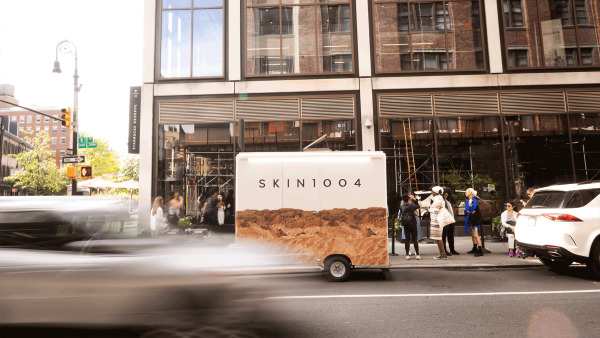
 SKIN1004 NYC launchTaking SKIN1004 to the streets: A citywide sampling experience driving buzz ahead of the NYC flagship opening.
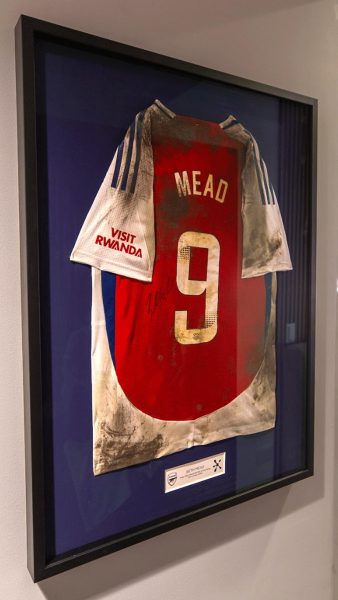
 Persil x ArsenalBringing "Every Stain Should Be Part of the Game" to life.
 Stories.Quick, easy reads about things we’ve been thinking, feeling and analysing lately. Get scrolling to keep up.
 AI Shopping and Black Friday 2026: Why Credibility, Not Choice, Will Close the SaleAsk most brands what AI will change about Black Friday and you'll hear some version of the same story: the bots are coming for the basket. Shoppers will ask an assistant for the best deal, and the assistant will buy it for them.Read more