London runs on brand activations. In any given month there’s a pop-up in Shoreditch, a launch party in Mayfair, an immersive room somewhere in Hackney Wick, and a stadium takeover that cost more than most annual marketing budgets. Most of them are well produced. A striking number of them are forgotten within a week, including by the people who attended.
The reason usually isn’t the activation itself. It’s what happened, or didn’t happen, in the two weeks either side of it. A live experience reaches the people in the room. That’s a hard ceiling, and no amount of production spend raises it. What raises it is whether the activation was built from the outset to travel, or whether digital amplification was something the team started thinking about once the venue was already booked.
That’s the gap a genuine brand activation agency in London exists to close, and it’s a structural problem with a structural fix.
The two campaigns that never quite become one.
Here’s the pattern that produces disappointing results while looking, on paper, like a complete campaign.
A brand books an experiential agency to build an activation. Separately, it books influencer support to cover the moment. The event looks impressive. The influencer content looks polished. And the content doesn’t carry the energy of the experience, because the experience wasn’t built with content creation in mind. The influencers weren’t briefed around the activation’s narrative. The physical space wasn’t designed to produce shareable moments.
What you end up with is two campaigns that happen to overlap, rather than one campaign that compounds. Both partners can report back with defensible numbers. Neither set of numbers reflects what the budget could have produced if the two had been designed together.
The alternative isn’t complicated, but it does require a decision at the briefing stage rather than the production stage: the experiential brief and the influencer brief should be the same brief. The physical space gets built to generate specific content moments. Creators are selected because their audiences align with the campaign’s strategic intent, not because they’re available on the date. The activation becomes the content engine, and the influencers become the distribution network.
Persil x Arsenal: an activation engineered to be carried.
The clearest London example of this working is our work with Persil (Dirt Is Good) UK and Arsenal Women’s Football Club at the Emirates Stadium.
The campaign started with a real problem rather than a creative concept. Research shows six out of ten girls skip sport because of fear of period stains, and Persil’s campaign, “Every Stain Should Be Part of the Game,” was built to challenge that directly. A box at the Emirates was transformed into an immersive experiential space on matchdays, but the more important decision was what went into it.
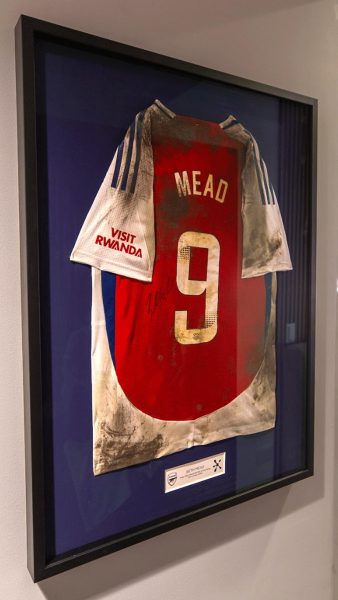
Every element was designed to produce content that carried the campaign’s message rather than simply decorate the room. An interactive Red Card Challenge gave guests something to do rather than watch. A “Period Pantone” wall turned an uncomfortable subject into a visual statement people wanted to photograph and, crucially, explain. Beth Mead’s framed and deliberately stained Arsenal kit made the campaign’s argument in a single object.
Influencers, creators and changemakers were invited into the space not as attendees but as amplifiers. That’s a meaningful difference in how you plan an activation. Attendees need to be hosted. Amplifiers need to be given something specific to say, a reason their own audience would care, and moments physically built for them to capture.
The campaign generated 8.9 million views and impressions and more than 234,000 engagements. What made those numbers work wasn’t the event alone or the influencers alone. It was that the space was built to produce the content, and the creators were briefed to carry the message. Neither element would have delivered those results independently, and that’s the entire argument for integration in one sentence.
Badalada: one space, two audiences, two jobs.
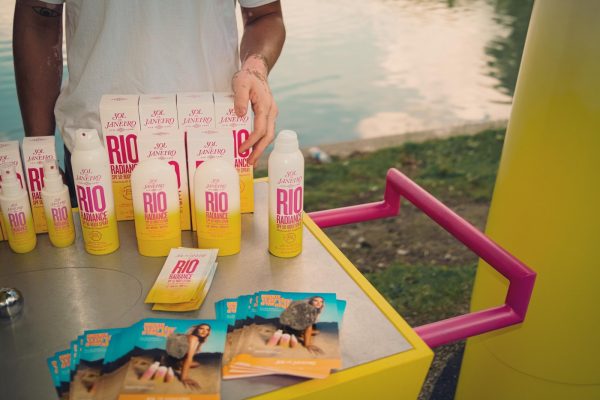
Sol de Janeiro’s Badalada launch took a different structural approach to the same problem, and it’s worth understanding because it solves a constraint most brands face: budget only stretches to one activation, but the campaign needs to reach more than one audience.
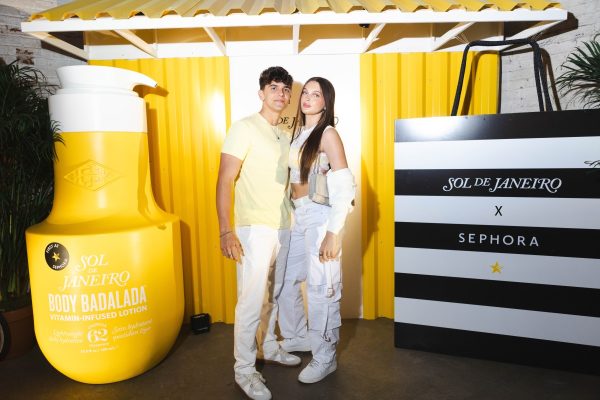
The answer was a two-day activation at 1896 Studios in Bushwick, New York, with each day serving a different audience through the same physical space. Day one was built for influencers and press. Day two opened to consumers. Across the activation, 150 influencer and PR guests and 500 consumers came through, in a build that only had to be designed, produced and paid for once.
The sequencing matters as much as the split. Running the creator day first means the content exists before the consumer day happens, which changes what the consumer day is: not just an event, but a moment people have already seen anticipated online. The physical space did double duty, and the digital output of day one fed the relevance of day two.
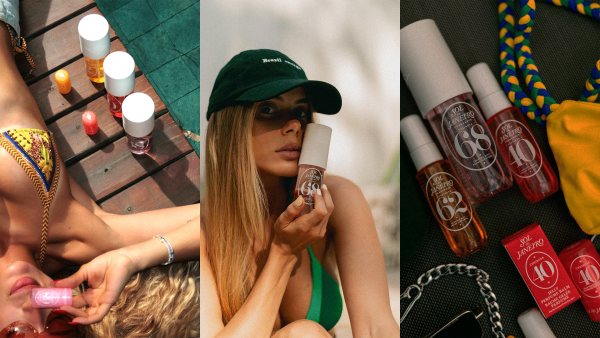
That thinking runs through our wider experiential marketing work, from Sol de Janeiro’s Carnaval activations in Brazil to SKIN1004’s citywide sampling ahead of its New York flagship opening, where the sampling mechanic itself required guests to follow the brand to unlock the final product. A physical action, engineered to produce a digital outcome.
What this means for how you brief an activation.
If you’re planning a brand activation in London or anywhere else, a few practical shifts follow from all of this.
Brief the space and the creators together. If the influencer conversation starts after the venue is confirmed and the build is designed, the content will always be a layer applied to an experience rather than an output of it.
Design specific content moments, not photogenic spaces. A beautiful room produces generic content. A room with three deliberately constructed moments, each making a different point about the campaign, produces content that says something. The Period Pantone wall works because it requires explanation, and explanation is what turns a photo into a post.
Decide what each guest is there to do. Some guests are there to experience the brand. Some are there to carry it to an audience. Those two groups need different briefings, different access and sometimes, as with Badalada, different days.
Measure output and distribution, not footfall. Attendance measures logistics. What matters is the volume and quality of content the activation generated, the reach that content achieved, and the sentiment attached to it.
Where the disciplines have to sit.
The practical obstacle to all of this is rarely disagreement about the principle. It’s org structure. When the experiential team and the influencer team work for different agencies, with different contracts and different KPIs, integration requires someone to volunteer coordination that nobody is being paid to do. It tends not to happen, or it happens too late to change the build.
At MG Empower, experiential, influencer marketing and social sit inside the same team, working from the same integrated marketing strategy, with paid amplification available to extend content beyond organic reach once it’s proven it performs. That’s why the briefs can be written as one document. It’s also why an activation’s content plan exists before the venue is confirmed rather than after.
We’ve written more on the structural case for this in why integrated experiential and influencer marketing delivers more than either can alone, and you can see the approach applied across markets in our case studies.
Frequently asked questions.
What is a brand activation? A brand activation is a live experience designed to create direct interaction between a brand and its audience, such as a pop-up, an immersive space, a sampling programme or an event takeover. Effective activations are built to produce content and conversation that continue after the event, not just to host attendees on the day.
How do you measure the success of a brand activation? Through the content and reach it generated rather than attendance alone. Useful measures include views and impressions, engagements, the volume of creator and consumer content produced, earned media value, and sentiment. Persil x Arsenal’s activation, for example, generated 8.9 million views and impressions and more than 234,000 engagements.
Should influencers be involved in a brand activation? Yes, and ideally from the briefing stage rather than as guests added to a finished plan. When creators are selected for genuine audience alignment and briefed around the activation’s narrative, they function as the campaign’s distribution network. When they’re invited late, the content rarely carries the experience’s actual message.
Can one activation serve both press and consumers? It can, if the structure accounts for it. Sol de Janeiro’s Badalada launch used a single two-day build at 1896 Studios in Bushwick, with day one serving influencers and press and day two opening to consumers, reaching 150 influencer and PR guests and 500 consumers through the same space.
Planning an activation that travels.
If your last brand activation looked excellent and delivered a reach number that didn’t match the invoice, the problem is almost certainly that the content plan arrived after the build. Our team can show you what changes when the experiential and influencer briefs are written as one document, using the same approach behind the campaigns above. Get in touch to talk through your next activation.
 SKIN1004 NYC launchTaking SKIN1004 to the streets: A citywide sampling experience driving buzz ahead of the NYC flagship opening.
 Persil x ArsenalBringing "Every Stain Should Be Part of the Game" to life.
 Stories.Quick, easy reads about things we’ve been thinking, feeling and analysing lately. Get scrolling to keep up.
 AI Shopping and Black Friday 2026: Why Credibility, Not Choice, Will Close the SaleAsk most brands what AI will change about Black Friday and you'll hear some version of the same story: the bots are coming for the basket. Shoppers will ask an assistant for the best deal, and the assistant will buy it for them.Read more