fbpixel From Private Equity Burnout to Building Elevate: Julia Baldet on the True Cost of Success - MG Empower
beb365b2-b317-4420-9f2a-6fc00c620cfc

From Private Equity Burnout to Building Elevate: Julia Baldet on the True Cost of Success

Share

Can ambition and wellness truly coexist, or have we normalised the idea that success must come at a personal cost?

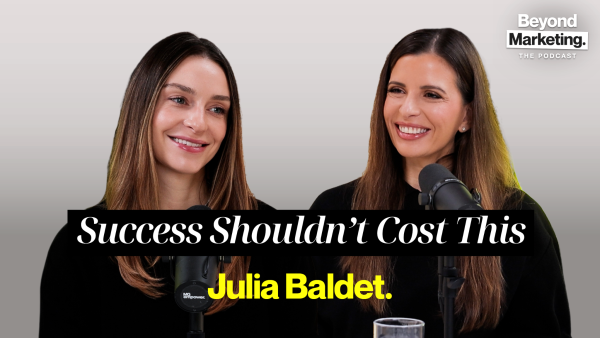
In Season 6, of  Beyond Marketing, The Podcast, Maira Genovese, Founder and CEO of MG Empower, sits down with Julia Baldet, Founder of Elevate, to explore burnout, entrepreneurship and what success should really mean.

Julia’s journey is not simply about leaving private equity to open a smoothie bar. It is a story about recognising when the life you worked hard to build is no longer working for you, and having the courage to create an alternative.

When success stops feeling successful.

Before founding Elevate, Julia worked in investment banking and private equity. Her days regularly began at 9 a.m. and continued past midnight, sometimes ending at 3 or 4 a.m.

Even after leaving the office, the work rarely stopped. Emails, messages, and constant availability became part of the culture. Eventually, that pace affected Julia both mentally and physically, resulting in burnout, exhaustion and stress-related health issues.

Her experience raises an uncomfortable question: if professional success comes at the expense of your health, is it truly success?

Julia’s wake-up call prompted her to return to the fundamentals: sleeping properly, eating well and moving her body. However, maintaining those habits while working in a demanding environment was far from straightforward.

“You can’t just fill yourself with coffee and survive on cortisol.”

That realisation became the starting point for Elevate.

Building the solution she once needed.

Julia wanted nutritious, functional options that could support a demanding lifestyle without asking people to reorganise their entire lives around wellness.

When she couldn’t find what she needed on her way to work, she recognised a wider opportunity.

Elevate was created around a simple philosophy: wellness should fit into real life. It should support busy, ambitious people rather than become another demanding task on their schedules.

This philosophy also influenced Julia’s decision to open Elevate’s first location in Bank. Instead of choosing an established wellness destination such as Chelsea or Notting Hill, she brought the concept directly to the professionals experiencing the same pressures she once faced.

It was a contrarian and risky decision. But Julia understood the audience because she had been part of it. Watch and Listen on Spotify 

35273e4e-31d5-4ad9-8ca1-79fc56a59bff

From investor to entrepreneur.

Although Julia’s finance career contributed to her burnout, it also gave her valuable entrepreneurial skills.

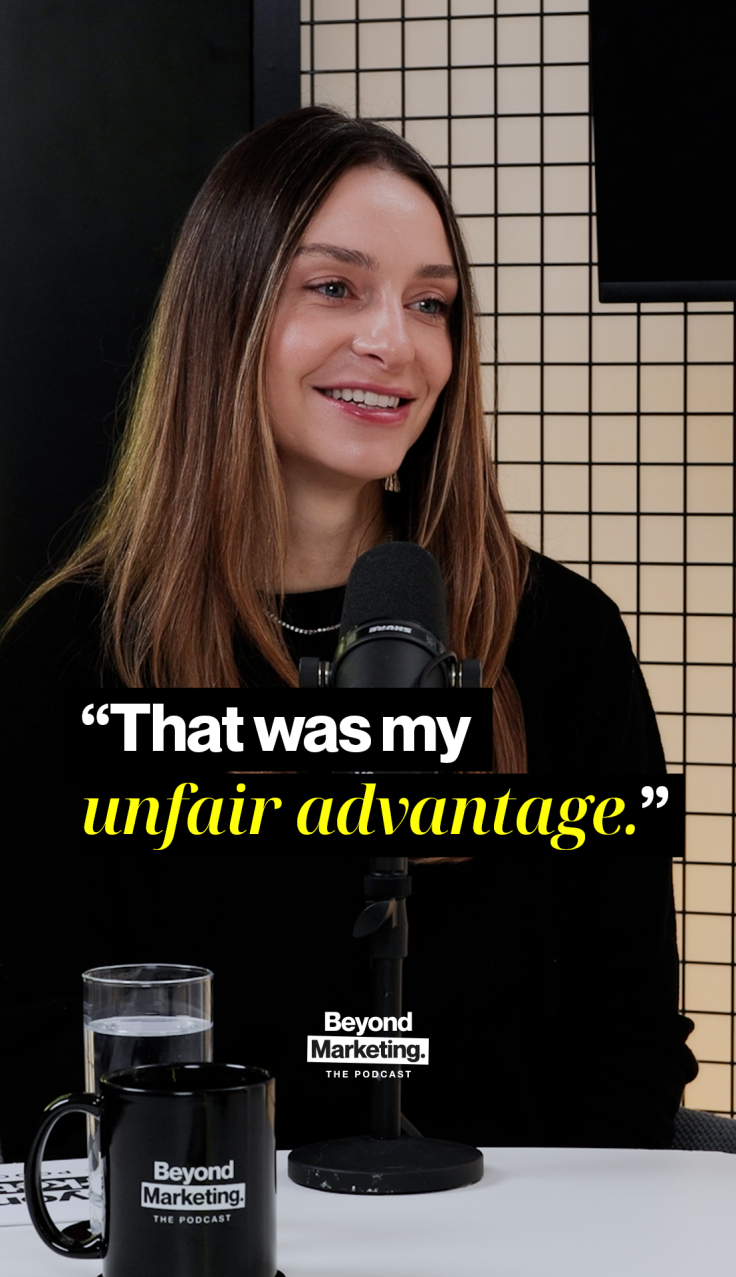
Having previously assessed companies from the investor’s perspective, she understood what potential backers expected from a founder. She used that knowledge as her “unfair advantage” while raising Elevate’s first £400,000 investment round.

But financial experience alone could not teach her how to operate a hospitality business.

Julia worked as a barista for several months before opening Elevate, learning the industry from the ground up. Once the first location opened, she spent her days behind the counter, serving customers, gathering feedback and improving the product in real time.

It required her to become a beginner again, put her ego aside and prove that she was willing to do the difficult work, not only present the vision.


A product people genuinely want to share

Elevate began building its audience before its doors opened. Julia shared the founder journey online, using social media to bring people into the process months ahead of the launch.

That early community helped generate awareness, but Julia is clear that visibility alone cannot sustain a consumer brand.

A product may attract attention because it looks good online, but customers will only return if the experience lives up to the promise. For Julia, product quality, customer feedback and constant iteration remain at the centre of the business.

The same thinking shapes Elevate’s brand collaborations. Rather than accepting every opportunity, Julia is becoming increasingly selective, focusing on fewer, more meaningful partnerships that make sense for the brand and its customers.

5f23fcf5-e697-4e7a-b5d6-1a8eeb93bd77


Learning to create your own opportunities

Julia’s journey also required a different relationship with risk.

She moved from a structured career built around analysis and risk mitigation to an environment where almost every decision carried uncertainty. Doubt did not disappear once she became a founder; she learned to keep moving despite it.

As a young female entrepreneur, Julia also had to become more comfortable promoting her work, approaching investors and asking for opportunities.

Her advice is direct:

“If you don’t ask, you don’t get.”

Creating your own version of success means backing yourself, putting your vision forward and making your own opportunities happen.

Watch and Listen on Spotify 

Redefining ambition

Julia’s story is not about rejecting ambition. It is about questioning the version of ambition we have inherited.

Elevate grew from the belief that people should not have to choose between performing at a high level and taking care of themselves. Wellness should support the life someone wants to build, not require them to step away from it.

The result is an honest conversation about burnout, risk, resilience and the realities of building a business from the ground up. More importantly, it invites us to reconsider what success looks like when health, purpose and sustainability become part of the definition.

Watch and Listen on Spotify 

Beatriz Ferraz Porto
Written by

Beatriz Ferraz Porto

PR & Communications Manager
Connect on LinkedIn

Beatriz leads MG Empower's marketing and communications strategy, overseeing content across digital and social channels. She also heads Talent Management for The Unknown, managing creator, client and internal collaboration, and leads the agency's presence at industry events, talks and awards from planning through to delivery.

Read more.

beb365b2-b317-4420-9f2a-6fc00c620cfc
From Private Equity Burnout to Building Elevate: Julia Baldet on the True Cost of Success

Elevate Founder Julia Baldet discusses leaving private equity after burnout, raising £400K and building wellness around busy, ambitious lives.

Read more.

IG 3
The Flat Fee Fix: How to Build Creator Partnerships That Last Beyond One Campaign

Ask most brands why their creator programme isn't moving to performance pay and you'll hear the same answer: the creators won't go for it. Every time commission comes up, the best ones say no and ask for their usual flat fee.

Read more.

20261021-143951
AI Shopping and Black Friday 2026: Why Credibility, Not Choice, Will Close the Sale

Ask most brands what AI will change about Black Friday and you'll hear some version of the same story: the bots are coming for the basket. Shoppers will ask an assistant for the best deal, and the assistant will buy it for them.

Read more.

CS_Airalo
Paid Media Meets Influencer Marketing: How We Amplify Campaigns Beyond Organic Reach.

The content is good, the creator is right, the engagement rate is respectable, and then the post simply stops reaching people, because every major platform's algorithm exists to keep users scrolling rather than to guarantee a brand's content finds its intended audience.

Read more.

9K1A2083 (1)
How MG Empower Turns Cultural Insight Into Brand Growth: A Culture-Led Marketing Framework.

Every agency says culture matters. Very few can answer the follow-up question: how would you know if a campaign failed on cultural terms while hitting all its media targets?

Read more.

Cropped Trenches-2
UGC and Social Commerce for Ecommerce Brands: What River Island’s Social Strategy Teaches.

There's a version of the UGC conversation that most ecommerce brands have had internally, and it usually goes wrong in the same place. Somebody points out that user generated content converts better than brand content. Somebody else points out that it's cheaper to source.

Read more.

WhatsApp Image 2026-06-27 at 21.16.43
AI in Influencer Marketing: How MG Platform Picks the Right Creator, Not Just the Biggest.

Almost every agency is publishing something about AI right now, and most of it says the same thing: AI is transformative, it will change everything, brands should prepare.

Read more.

CS_BUM_1
Enterprise Influencer Campaigns That Actually Move the Needle: Inside Bumble’s Award-Winning Black History Month Campaign.

There's a particular way that large brands get influencer marketing wrong, and it isn't the way people expect. Enterprise campaigns rarely fail on execution.

Read more.

CS_Badoo
Influencer Marketing for Tech and App Brands: What Badoo’s 23.6% Engagement Campaign Proves.

There's a structural problem in marketing an app or a tech product through influencers that most agencies underestimate.

Read more.

Copy of DSCF0419 (1)
Beauty Influencer Marketing ROI: Real Benchmarks From SKIN1004, Sol de Janeiro and amika.

What beauty influencer campaigns actually return, benchmarked against three real launches for SKIN1004, Sol de Janeiro and amika across different markets.

Read more.

How can we empower your brand?

LET’S CONNECT

© MGEmpower 2026
PART OF
Get in Touch